Tag Archives: January 2025

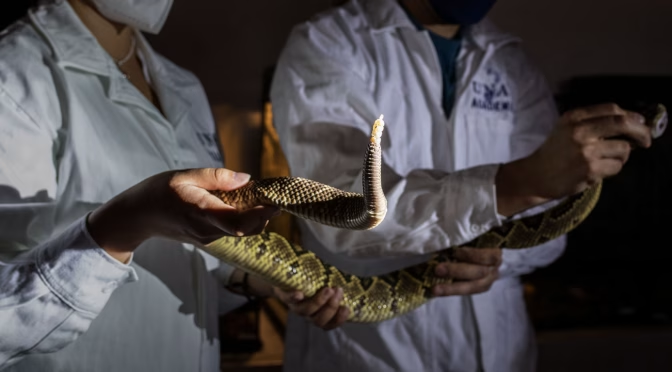
Antivenom Production in Mexico

By Marcia Chaiken and Jan Chaiken

Epidemiologists around the globe agree that bites from venomous snakes constitute a major worldwide health problem. The World Health Organization reports that over two million people are envenomated by snakes annually, resulting in approximately 100,000 deaths and four times as many permanent disabilities. Although data on snake bites are known to be underestimates of the true incidence, a study of medical records from 2010 to 2022 in Mexico found that 10,420 cases had been registered.

The Venomous Snakes of Mexico

There are approximately 400 species of indigenous snakes in Mexico. Three taxonomic groups are venomous: vipers including rattlesnakes, coral snakes, and sea snakes. These biological families consist of numerous species that are indigenous in specific Mexican regions. For example, in the state of Aguascalientes, there are seven indigenous species of venomous snakes: one species of coral snake and six species of rattlesnakes, including the enormous Crotalus basilicus. In addition, in the northern and southern border areas there are other venomous biters that have illegally crossed international lines, such as the copperhead, predominantly found in the United States. Although none of these snakes hunt for human prey, if accidentally disturbed they can strike with disastrous effects.

The venoms from different species are not composed of exactly the same proteins and toxins, so the effects of bites can vary. But in general, rattlesnake venom causes excessive bleeding, the death of tissue around the bite, neurological damage ranging from tingling to paralysis, and comas or kidney, respiratory, and heart failure, possibly leading to death. Coral snake venom can be even more toxic than that of the rattlesnake.

The Only Remedy?  Antivenom

There are a host of folk remedies for snake bites, but none are advisable. The only medically approved treatment is a dose of antivenom. Antivenom was first developed in France over a century ago, based essentially on the same research and treatment developed by Louis Pasteur in his work on combatting smallpox and rabies. Basically, a nonhuman mammal is repetitively injected with small doses of a toxin, venom or other disease-causing substance, with the result that the animal’s immune system produces antibodies that essentially neutralize the virulent invader. A relatively small portion of blood is removed from the immunized animal, and the serum in the blood that contains the antibodies is separated and used to inject humans who have been envenomated. The antibodies in the serum counteract the venom. The animals used for research are often mice – but for practical production of antivenom, horses have been used for decades to produce enough serum for medical purposes.

The problem remains, however, that the effectiveness of the antibodies produced is dependent on the specific venom received during a bite. Because different species of snakes produce venom with chemically distinct properties, the antibodies that are formed in response to venom from one species may be ineffective in combatting venom from another species. In the 1990s, faced with this reality and the need for increased supplies of antivenom (for scorpion and black widow spider bites as well as for snake bites), Mexico revolutionized the antivenom industry by establishing a number of large horse farms entirely devoted to producing sera containing diverse antibodies.

Antivenom Production in Mexico

Three Mexican companies compete in this enterprise: Instituto Biocion, Inosan Biopharma, and BIRMEX, all headquartered in Mexico. They are aided by research conducted at the Institute of Biotechnology at Mexico’s National Autonomous University (UNAM), which houses a large herpetarium with over 60 species of venomous snakes from around the world. Each pharmaceutical company runs its own horse farms. One farm, the Ojo de Agua Ranch in Puebla, has over 160 Criollo horses; its work has received much publicity, but the production process appears similar throughout the industry.

The snakes are “milked” for their venom by electrical stimulation or by carefully guiding them to bite down on the porous cover of a specialized sterilized container. The venom naturally flows from the venom glands into the container and then is stored in vials for injection. Horses are injected with small doses of venom from multiple types of venomous snakes for approximately six months or until the antibodies produced in reaction to the venom reach a designated concentration. The horses are then periodically bled, removing several liters of blood. The antibody-rich plasma is separated from the rest of the blood, and the blood without the plasma is transfused back into the same horse. If you have ever donated blood or received a blood transfusion, you know that, except for the initial needle prick, this is a painless procedure.

Up to this point, antivenom production is carried out in much the same way it has been for over a century. However, the collected horse serum naturally contains, in addition to the desirable antibodies, components to which humans are allergic. So pharmaceutical companies conduct research and develop processes for ridding the serum of components that produce negative reactions in humans. The process has reached the point where the ever-vigilant US FDA has approved several products.

Other research being carried out by the current antivenom companies focuses on ways to enhance the shelf life and stability of antivenom medications, ways to standardize the amount of antibodies in a given dose, the mechanism through which the antibodies neutralize the toxicity of the venom, and perhaps in the near future, ways to produce the antivenom antibodies in vitro rather than using horses as an intermediate step. The companies are also studying the possibility of using some components of venom for treating diseases. For more about this, see the article in this issue by Kary Vannice.

Although Mexico is one of the leading countries in the production of antivenom, the best way to deal with venomous snake bites here is to avoid them. Pay attention to signs advising caution on hiking trails. Be aware that construction sites are disturbing indigenous critters and send snakes on the run (actually, a determined slither). And most snakes, venomous or not, are more likely to be on the move in the rain. If you have an encounter of the toxic kind, call for help to rapidly move you to the nearest health clinic and then thank the horse that provided you with lifesaving antibody-rich serum.


Tilcoatle: The Nice Snake vs. the Fer-de-Lance, the Not-So-Nice Snake

By Julie Etra

How many ways are there to say “snake” in Spanish? The answer is three (or four, depending on interpretation): serpiente, culebra, víbora (which also refers to vipers, a specific type of snake, including pit vipers), and cascabel, which refers to rattlesnakes. On the Oaxacan coast, we’re home to many snakes. While over 170 species of reptiles exist here—including lizards—this article focuses on two specific snakes: the Tilcoatle (Drymarchon melanurus ssp. erebennus) and the Fer-de-Lance (Bothrops asper). The Tilcoatle is fascinating, while the Fer-de-Lance is equally so but thankfully absent from the Oaxacan coast.

Taxonomy: Understanding the Tilcoatle
The Tilcoatle, also known as the blacktail cribo or middle American indigo snake in English, goes by an impressive variety of names in Spanish: alicante, rey negra (king snake), ratonera negra (black rat killer), culebra arroyera (arroyo snake), babatúa, culebra azul (blue snake), zumbadora (buzzer), culebra prieta (brown snake), culebra negra (black snake), palancacoate, sabanera (savannah dweller), and sayama enjaquimada. Its scientific name originates from Greek: “Drymos” means “forest” and “archon” means “governor,” while “melano” translates to “black” and “urus” means “tail.”

Morphology and Physiology: The Tilcoatle’s Traits
The Tilcoatle is a large snake, measuring an average of 6.5 feet (2 meters) in length as an adult, with some specimens growing up to 3 meters. Its tail constitutes 20% of its overall length. This snake is a visual marvel, with smooth, shiny black scales and an underbelly that can be reddish or yellow. Juveniles often feature faint bands that fade as they mature. While it has teeth and a strong jaw, the Tilcoatle lacks fangs. It is diurnal, meaning it is active during the day, and shelters at night in holes among rocks, rotting roots, or burrows. Breeding occurs annually in winter, with females laying 4–12 eggs under rocks or roots, which hatch in about 80 days. Hatchlings can measure up to 26 inches (66 cm) and reach maturity in two to three years. Their lifespan averages 11 years.

Habitat and Diet: Where the Tilcoatle Thrives
The Tilcoatle is found from the southeastern United States to northern South America. Its adaptability allows it to thrive in various habitats, from forests to deserts. In Mexico, it often inhabits riparian and lacustrine areas and is particularly common around Lake Chapala in Jalisco.An active and voracious predator, the Tilcoatle preys on lizards, bats, rodents, fish, frogs, toads, carrion, and even other snakes, including rattlesnakes and its own species. It has been observed consuming Pituophis deppei (Mexican bull or pine snake) and nauyacas (Fer-de-Lance). The Tilcoatle’s method of predation is unique; rather than venom or constriction, it kills prey by breaking their bones with a powerful bite. Remarkably, its blood is resistant to rattlesnake venom but not to coral snake venom.

Defensive Behavior
Despite its size and predatory capabilities, the Tilcoatle is not aggressive. When threatened, it prefers to flee. Alternatively, it may take a defensive stance by contracting its body and whipping its tail against dry leaves, producing a sound similar to a rattlesnake’s warning. It also emits a foul-smelling odor from its cloaca as a further deterrent.

Myths and Legends Surrounding the Tilcoatle
The Tilcoatle is the subject of numerous myths. One tale suggests that the snake sneaks up on a nursing mother and her baby, sedates them with its breath and tail, and then drinks the mother’s milk, leaving the baby malnourished. Though untrue, this legend is widespread in Mexico, possibly originating in pre-Hispanic times when snakes were revered as deities like Quetzalcoatl, associated with fertility.Other myths claim that the Tilcoatle can deliver a painful whip-like injury with its tail (“chicotazo”). Supposedly, if killed, the snake’s stomach reveals a magical stone that becomes a talisman for the slayer. Some believe the best way to kill a Tilcoatle is by placing a machete upright in the ground so that the snake, striking out, injures itself fatally.Interestingly, the Tilcoatle lends its name to a local cooperative supporting musicians and cultural activities, including free performances at the Mercado Orgánico de Huatulco.

The Fer-de-Lance: A Cautionary Tale
The Fer-de-Lance, known as terciopelo (velvet) in Mexico, is scientifically named Bothrops asper. Its name combines Greek and Latin roots: “Bothros” (“pit”) and “ops” (“face”) refer to its heat-sensing pit organs, while “asper” means “rough.” In French, Fer-de-Lance translates to “spearhead.” This highly venomous pit viper ranges from southern Mexico to northern South America. Unlike the Tilcoatle, the Fer-de-Lance is nocturnal and thrives in moist environments near human habitation, where prey is abundant. Its lifespan is up to 20 years, and females are significantly larger than males.

A Deadly Reputation
The Fer-de-Lance is a dangerous snake with the ability to inject an average of 105 mg of venom per bite; recorded yields go up to 310 mg. As little as 50 mg is enough to kill a human. Its venom causes rapid necrosis, and even with antivenom treatment, survivors often face amputation. Described as unpredictable and excitable, the Fer-de-Lance can move quickly and reverse direction with alarming speed. In Costa Rica, it is responsible for 46% of snake bites and 30% of related hospitalizations. Symptoms of envenomation include severe swelling, bruising, blistering, fever, gastrointestinal bleeding, and even organ failure. Fatalities are often due to sepsis, brain hemorrhage, or kidney failure.

Reducing Fer-de-Lance Fatalities
The Clodomiro Picado Research Institute in Costa Rica has significantly reduced fatalities through antivenom production and venom research. Founded in 1970 by Dr. Clodomiro Picado Twight, the institute plays a vital role in saving lives across Central America.

Moral of the Story
While the Tilcoatle is a fascinating and generally harmless snake deserving of admiration and conservation, the Fer-de-Lance commands respect and caution. Give these creatures the wide berth they deserve, and appreciate them from a safe distance.

Sneak Preview 2025: A Few New Gems by Our Favorite Writers

By Carole Reedy

The end of the year creates a wondrous feeling of bookish anticipation that helps move us through the post-holiday doldrums. To whet your appetite for our upcoming reading pleasure, here’s a brief preview of new books by several favorite authors, both fiction and nonfiction. Publication dates are, as always, subject to change.

Fox: A Novel, by Joyce Carol Oates (July 2025)
Lolita for feminists! In yet another of her original novels, the prolific and amazing Joyce Carol Oates this time takes on Vladimir Nabokov’s classic Lolita (1955), shifting the perception to that of the woman in the tale, a temptress schoolteacher named Frances Fox.

I try to read everything Joyce Carol Oates creates. Despite writing more than 100 books, she still finds new, varied, and creative paths to entertain and captivate her readers.

Flashlight: A Novel, by Susan Choi (June 2025)
Susan Choi won the National Book Award for Fiction in 2019 for her novel Trust Exercise: A Novel (2019).

Her newest novel, Flashlight, tells the story of Louisa and her family after her father disappears when she is ten years old. By focusing every other chapter on a different family member, complicated stories are revealed through time, patience, and memory.

Sounds challenging and intriguing.

The River Is Waiting: A Novel, by Wally Lamb (May 2025)
We eagerly await new novels from this skilled writer of the best sellers She’s Come Undone (1992) and I Know This Much Is True (a Novel) (1998).

Advance press for Lamb’s new novel refers to a great deal of pain created by the protagonist’s own mistakes. He goes to prison, where, pondering his errors, he wonders if he can ever be forgiven. Is there a possibility of atonement for the unforgivable?

Fever Beach: A Novel, by Carl Hiaasen (May 2025)
With 14 novels and many best sellers – Skinny Dip: A Novel (2004), Sick Puppy: A Novel (2000), and Squeeze Me: A Novel (2020), among others – under his belt, Hiassen returns with two unique characters who continue yet another laugh-out-loud adventure story in the author’s home state of Florida.

Don’t Forget Me, Little Bessie, by James Lee Burke (June 2025)
Burke, who spent most of his life in the US South, is one of the most popular mystery writers of our time. Currently splitting his time between Montana and Louisiana, he says the greatest influence in his life was the 1929 novel The Sound and the Fury by William Faulkner.

His latest takes place in Louisiana and New York City and is told through the eyes of 14-year-old Bessie Holland. Holland finds solace in her mentor, a suffragette English teacher who encourages her to always keep fighting, but the challenges presented at the beginning of the 19th century seem almost insurmountable.

Warhol’s Muses: Artists, Misfits, and Superstars Destroyed by the Factory Fame Machine, by Laurence Leamer (May 2025)
Bestselling biographer Leamer explores the lives of 10 superstar women Andy Warhol manipulated for his own artistic benefit while also revealing the mysteries of Warhol’s turbulent life and work. Surely meant to sensationalize!

Leamer is the author of Capote’s Women: A True Story of Love, Betrayal, and a Swan Song for an Era (2023), Hitchcock’s Blondes: The Unforgettable Women behind the Legendary Director’s Dark Obsession (2023), and The Kennedy Women: The Saga of an American Family (1996).

Men in Love, by Irvine Welsh (July 2025)
This much-anticipated sequel to the 1993 cult classic Trainspotting joins the two existing sequels, Porno (2005) and Dead Men’s Trousers (2018), but this new novel takes place immediately after Trainspotting.

Recall the characters in Trainspotting (Renton, Spud, Sick Boy, and Begbie) were heroin users in Edinburgh. In this new novel, the crew is dispersed to Scotland, London, and Amsterdam where they try to substitute love for heroin. The author tells us he has never stopped writing about these strange, beloved characters from Trainspotting.

Three years after Trainspotting was published, Danny Boyle converted it into a successful movie starring Ewen McGregor, Robert Carlyle, and Johnny Lee Miller.

Vianne, by Joanne Harris (May 2025)
We know Joanne Harris for her multi-million-copy bestselling Chocolat (1999). Vianne is the story that takes place six years before the famous chocolaterie opens.

It appears this newest novel is equal to its predecessor both in its sensuality and its ability to provoke thought.

Mark Twain, by Ron Chernow (May 2025)
Ron Chernow is the Pulitzer Prize-winning biographer who has tackled the challenge of relating the varied and exciting life of the famous journalist, satirist, and performer Mark Twain.

We know Mark Twain for his two novels Adventures of Huckleberry Finn (1884) and The Adventures of Tom Sawyer (1876), but there is much more to his life and story that comes via his thousands of letters and unpublished manuscripts.

Samuel Langhorne Clemens adopted the moniker Mark Twain and thus gave the world hundreds of hours of entertainment in his vast library of writing. More than a hundred years after his death, Twain, who travelled the world and wrote about it, is still voraciously studied in schools worldwide.

His clever use of words, description, and phrases is still quoted. Some of his most famous aphorisms include, “A classic is a book that people praise and don’t read.” Then there’s “I have never let my schooling interfere with my education,” as well as the popular, “Never put off until tomorrow what may get done the day after tomorrow just as well.”

Speak to Me of Home: A Novel, by Jeanine Cummins (May 2025)
Cummins is the author of the Oprah Winfrey-recommended and highly controversial novel American Dirt (2018), in which a woman and her son must escape their home in Acapulco when they are pursued by narcos. The journey through Mexico and the doubts arising from the purpose of their adventure are the basis for the book.

This new novel takes place in Puerto Rico and the US, telling the tales of fifty years and three generations of immigrants. It is ultimately a story of mothers and daughters and the decisions they face and are haunted by.

This is only a sampling. Many more book recommendations forthcoming over the next few months.

Happy Reading New Year 2025!

The Snake on the Mexican Flag

By Jane Bauer

The Mexican flag is a symbol of pride that’s steeped in history and meaning. Its design is bold and unforgettable: three vertical bands of green, white, and red, with the Mexican coat of arms front and center. While the colors have their own stories, it’s the coat of arms that really draws you in—a golden eagle perched on a prickly pear cactus, clutching a snake in its talons and beak. This powerful image tells a story that’s deeply tied to Mexican identity, blending mythology, history, and nature.

The snake on the flag isn’t there by chance; it’s an essential part of the founding myth of Tenochtitlán, the ancient capital of the Mexica people. According to legend, the god Huitzilopochtli told the Mexica to build their city where they saw an eagle eating a snake while perched on a nopal cactus. This vision supposedly appeared in the middle of a lake, a divine sign for them to settle there. In 1325, they established Tenochtitlán on an island in Lake Texcoco, which eventually became the heart of the Aztec Empire. Today, the site of that legendary city is Mexico City, one of the most vibrant and sprawling cities in the world.

The eagle and snake image is loaded with symbolism. The eagle, a predator of the skies, stands for strength, power, and the heavens. It’s often seen as a symbol of the sun, which was central to Mesoamerican beliefs. The snake, on the other hand, is more complex. In many cultures, snakes symbolize fertility, rebirth, and transformation because they shed their skin. In Mesoamerican traditions, the snake is also tied to the earth and the underworld, representing wisdom and duality. When you put the eagle and snake together, they embody the balance of opposing forces: heaven and earth, life and death, the divine and the human.

So, why is the snake being eaten? Some say it represents good triumphing over evil or chaos being brought under control. Others think it reflects the Mexica’s ability to survive and thrive in a tough, competitive world. Whatever the interpretation, the image speaks to Mexico’s history of struggle and resilience, from the rise of the Mexica to the challenges the country faces today.

The inclusion of this imagery on the flag ties Mexicans not just to their indigenous roots but also to the natural world. The nopal cactus, with its bright green paddles and red fruits, is native to Mexico and a key part of the country’s environment and cuisine. By placing the eagle and snake on the cactus, the story becomes firmly rooted in the land itself, blending a heavenly vision with earthly reality. It’s a reminder of the deep connection between the people and the place they call home.

Over the years, the flag’s design has changed to reflect Mexico’s shifting political and social landscape. But the core image of the eagle, snake, and cactus has stayed the same, showing just how enduring and powerful it is. During the fight for independence in the early 1800s, the flag’s colors took on new meanings: green for independence and hope, white for unity and faith, and red for the blood of those who fought for freedom. Combined with the coat of arms, the flag became a unifying symbol for a diverse nation carving out its identity.

Today, the Mexican flag is more than just a national emblem; it’s a source of pride for Mexicans everywhere. The story of the eagle and snake is a reminder of the importance of resilience, adaptability, and staying connected to our roots. It’s a visual story that captures the complexity and beauty of Mexico—a country shaped by myth, history, and the strength of its people. Flag Day in Mexico is celebrated on February 24th.

Editor’s Letter

By Jane Bauer

He that has been bitten by a snake is afraid of a rope.
Edward Albee

As we step into the Year of the Snake, it feels like the perfect time to reflect on the power of shedding—letting go of what no longer serves us. Snakes, with their ancient ability to shed their skin, have long been symbols of transformation and renewal. And in this upcoming year, I find myself asking: How can we, like the snake, release what holds us back and make space for growth, healing, and the things that truly align with who we are becoming?

In Mexican culture, the snake carries a deep and powerful meaning. On Mexico’s flag, the eagle grips a serpent in its beak while perched on a cactus. This image isn’t just about the nation’s founding—it’s about balance, transformation, and the struggle that leads to wisdom. The snake here is not just a symbol of danger; it’s also a symbol of the great god Quetzalcoatl, the feathered serpent who represents life, knowledge, and the cycles of nature. It reminds us that sometimes, our greatest victories come from the struggles we face, and that embracing change—however uncomfortable—can lead to deeper wisdom.

Compare this with the serpent in the Garden of Eden. In this story, the snake is often seen as the tempter, the one who introduces sin into the world. But, in reality, temptation is a catalyst for change. It’s a break from the old way, a shift that forces us to reconsider, to evolve. Just as the snake sheds its skin to reveal something new beneath, we too can let go of old beliefs, outdated habits, and things that no longer serve our growth. In this Year of the Snake, I think it’s time to ask ourselves: What are we still holding onto that no longer serves us? And not only personal habits, but about the larger mindset we’re living in. Our culture of overconsumption, greed, and constant striving has disconnected us from what truly matters. We’re so focused on acquiring more—more stuff, more money, more distractions—that we’ve forgotten the peace and wisdom that comes from living more simply, from living in harmony with nature. What if we decided to shed that?

What if we let go of the pursuit of more and started reconnecting with the earth, with each other, and with the deeper parts of ourselves that are calling for attention? The snake’s ability to shed its skin is a powerful reminder that, sometimes, we need to let go of the superficial layers in order to reveal what’s underneath—the authentic, the raw, and the life-giving.

So let’s take a cue from the snake and shed the old patterns and return to nature, to what’s real, and to the deeper, quieter truths that sustain us. By letting go of what no longer serves us, we make space for renewal—both in our lives and in the world around us. Because, in the end, shedding isn’t a loss. It’s the beginning of something new.

See you in February,

Huatulco after FONATUR

By Randy Jackson

In 2023, a milestone agreement was reached that would alter the development path of the federally planned tourism resort of Huatulco. This agreement transfers the assets, responsibilities, and obligations of the developer, FONATUR (Fondo Nacional de Fomento a Turismo), to the State of Oaxaca and the municipality of Santa María Huatulco.

Huatulco was conceived, built, and financed by the federally run tourism development organization known as FONATUR, responsible for Mexico’s nationally developed resorts known as CIPs – Centros Integralmente Planeado, or fully-planned [tourism] centers, the first of which was Cancún in 1974. Prior to development, the Huatulco area was a pristine collection of bays and isolated fishing villages without road connections. Since 1984, FONATUR has developed, maintained, and operated Huatulco through the administrations of several different presidents. Under the recent presidency of Andrés Manuel López Obrador (AMLO), in a bid to decentralize tourism management in Mexico, the entire resort of Huatulco, along with the Mazatlán Marina, Los Cabos, Ixtapa, and parts of Cancún and Cozumel, were all slated to be transferred from FONATUR to state and local authorities. For Huatulco, this transition has begun.

In this article, I outline what we know about Huatulco’s FONATUR transition, its implications, and some of its current challenges.

The Transfer Agreements

1) Convenio General de Colaboración (General Collaboration Agreement), dated May 30, 2023. The agreement states that FONATUR transfers public services and infrastructure management in Huatulco’s CIP to the state government, including roads, water systems, lighting, and waste management. FONATUR will donate related assets and collaborate with the state of Oaxaca during the transition.

2) An agreement dated December 29, 2023, effective January 1, 2024. This agreement formalizes the transfer of infrastructure and public service management in the Huatulco CIP from FONATUR to the state of Oaxaca and the municipality of Santa María Huatulco. It includes transferring assets like water systems, waste management facilities, roads, green spaces, and financial support of $143.8 million MXN ($7.2 million USD) in 2024 to ensure seamless operations.

3) A modification agreement, dated January 4, 2024, amends the above agreement to designate FIDELO (Fideicomiso para el Desarrollo Logístico del Estado de Oaxaca, or the Trust for the Logistical Development of the State of Oaxaca), a state-run entity, as the primary entity to manage the transferred assets and oversee services like water supply, sanitation, and waste management.

The transfer agreements also state that FONATUR remains the legal title holder of the properties until all legal and administrative approvals are secured. It also states that FIDELO is to provide quarterly and annual reports to FONATUR detailing the operation and maintenance of the transferred infrastructure and services. These reports are to include financial statements, operational metrics, and compliance with established service standards. These reports have not been made public.

Enter FIDELO

FIDELO is a parastatal entity (a public corporation) created by the state of Oaxaca on February 15, 1997. Its main objective is to position the state as a competitive region for developing various productive sectors through the promotion and execution of logistics, social, commercial, and tourism projects. Among the functions of FIDELO are to:

· carry out infrastructure and urbanization works
· obtain credits and grant guarantees for financing
· enter into agreements with public and private entities to promote the state’s economic development

FIDELO has been involved in various projects in Oaxaca, notably revitalizing the Parque Industrial y Maquilador (Industrial and Manufacturing Park) in Magdalena Apasco, Etla (outside Oaxaca City). However, public information on FIDELO’s other projects is limited.

FIDELO has now assumed the public services and infrastructure management previously performed by FONATUR in Huatulco. This includes the water and wastewater systems, parks and boulevard maintenance, solid waste collection, landfill operations, infrastructure maintenance, and all areas of administration required for such services. FIDELO has appointed Lorenzo Lavariega Arista, a former president of the municipio of Santa María Huatulco, as Director of Tourism Center Development. He has an office in Huatulco.

When FIDELO assumed its current Huatulco obligations from FONATUR, it incorporated all the FONATUR staff who provided the transferred services. There followed a staff reduction of about 25%. Lavariega has said he expects the staffing level to increase as the budget allows. Both state and federal 2025 budgets are expected to be approved before the end of December 2024.

Transfer Implications for Huatulco

Transferring the Huatulco CIP from federal to local management has sparked significant concerns for residents and visitors. Oaxaca, the second poorest state in Mexico, may struggle to manage the project’s financial and operational demands. This is particularly alarming given the current inadequacies in critical infrastructure, such as potable water and sewage treatment, which are insufficient to meet existing needs. Urgent upgrades and maintenance are required to ensure sustainability and support future growth.

Additionally, FONATUR had outlined a vision for Huatulco’s future development. However, with its departure, the long-term strategy and prospects for Huatulco’s growth under state and local administration remain unclear beyond the immediate transition of services. While FONATUR has relinquished operational responsibilities, it retains a significant presence as the owner and marketer of undeveloped properties in Huatulco.

FONATUR’s underfunding of Huatulco in recent years has significantly contributed to the current challenges in critical infrastructure, leaving the state of Oaxaca, with at least some federal funding, to prioritize much-needed upgrades. Despite these pressing issues, the transition of operational control from FONATUR to the state of Oaxaca began over a year ago, but the state has not announced a comprehensive plan or future vision for Huatulco.

According to Director Lavariega, Huatulco is of great importance to the state of Oaxaca as a key driver of tourism and economic development. There are no plans for the municipio of Santa María Huatulco to assume the obligations currently held by FIDELO following the transition. Looking ahead, Lavariega anticipates that CIP Huatulco’s needs will be prioritized and addressed depending on the allocation of federal and state resources.

The transition from FONATUR to state and local control marks a pivotal moment in Huatulco’s development, and its future remains uncertain. While FIDELO has taken over essential services and infrastructure management, significant challenges persist, particularly regarding the adequacy of funding for infrastructure to support the area’s growing needs.

With Huatulco positioned as an important driver of tourism and economic growth in Oaxaca, the coming months and years will reveal whether the state can rise to the occasion and deliver a sustainable vision for Huatulco’s future. As residents, businesses, and visitors await some news of the path forward, the story of Huatulco after FONATUR is far from finished—its next chapter has yet to be written.

For comments or contact, email: box95jackson@gmail.com.

Protecting Corn

By Jane Bauer

Mexican President Claudia Sheinbaum recently announced plans to constitutionally safeguard non-genetically modified (non-GMO) white corn, highlighting its critical role in Mexico’s biodiversity, agriculture, and cultural heritage. The proposed amendment seeks to enshrine protections for native corn varieties, reflecting the nation’s commitment to preserving its agricultural legacy.

Sheinbaum’s announcement comes shortly after a trade dispute panel ruled that Mexico’s restrictions on U.S. genetically modified (GM) corn imports violated the United States-Mexico-Canada Agreement (USMCA). Despite the ruling, Sheinbaum expressed confidence that Mexico’s Congress will legislate a ban on planting GM corn by early 2025. “With the help of Mexico’s Congress, we are going to reverse this resolution because very soon, in February, they are going to legislate, I am sure, that you can’t plant genetically modified corn,” she stated at a recent public event. She emphasized the need to protect Mexico’s biodiversity, declaring, “Without corn, there is no country.” Corn holds a special place in Mexican culture and cuisine, serving as the foundation of traditional foods like tortillas, tamales, and pozole. Revered since pre-Hispanic times, it is deeply intertwined with Mexico’s identity, mythology, and daily life. Mexico is home to 59 native varieties of corn, many of which are cultivated in regions like Oaxaca, a hub for traditional farming practices and biodiversity. This reverence extends to native corn varieties, which are seen as a treasure to be preserved for future generations.

While Mexico imports significant quantities of GM yellow corn from the United States for livestock feed, the proposed constitutional amendment underscores the need to balance trade obligations with safeguarding Mexico’s agricultural heritage and ensuring the survival of its native corn varieties. The potential ban on GM corn planting would not prevent imports of GM varieties but aims to shield native crops from contamination and protect the cultural significance of corn. Critics of GM crops argue that their safety for human health and the environment remains unproven, while proponents highlight their utility in disease resistance and productivity.

The current impasse stems from a February 2023 presidential decree that banned the use of GM corn for tortillas and dough, advocating for alternatives in industrial production for human consumption and animal feed. Sheinbaum’s proposed measures seek to uphold this vision.
Source: Reuters

¡Ojos! Watch Out!!! Avoiding the Venomous Snakes of Oaxaca

By Deborah Van Hoewyk

One of Huatulco’s major attractions is its natural setting. From the famous “nine-bays-and-thirty-six-beaches,” to waterfalls and wildlife, to mountain trips and horse-back riding, being active outdoors is just at your doorstep. And going farther afield in Oaxaca, you find the lagoons and mangroves of the coast, the frozen white waterfall of Hierve el Agua (literally, “boil the water”), and the hiking trail between the eight villages of the Pueblos Mancomunados (hard to translate, sort of a “community of towns”), to name just a few outdoor adventures.

In all of these environs, you will find snakes. Some are venomous, and some are harmless. Left alone, all of them will leave you alone. But should you not be looking, and step on one, it may well attack you. Here are the venomous ones, what they look like, and where you should be watching out for them.

The Vipers

Rattlesnakes. There are two kinds of vipers in Mexico, and most belong to the genus Crotalinae, the rattlesnakes. In the articles in this issue on snake venom, you will learn that Oaxaca has its share of rattlesnakes. Rattlesnakes are “pit” vipers – they have pits near their eyes that contain heat-sensing organs. The sensors let the snake “see” warm-blooded prey. Most hunt at night, so the heat-sensing is key to being able to strike at their prey in the dark.

There’s the pygmy rattlesnake (Croatalus ravus, with three subspecies) – it’s 18-30 inches long and is found in the mountains. It is the usual mottled brown you associate with rattlesnakes.

There’s the black-tailed rattlesnake (Crotalus molossus oaxacus) – it grows to over 4 feet long, and is found in the desert, mesquite grasslands, and pine-oak forests (in the Sierras between 7,000 and 10,000 feet). It comes in varied colors – brown, yellowish, olive-greeny – but the scales on its tail are black.

The small-headed rattlesnake (Crotalus intermedius) – is small all over, growing to about 24 inches long. It is found in the pine-oak forests on the mountains, and looks like your idea of a rattlesnake.

The famous fer de lance. Another pit viper, even more to be avoided than the rattlesnakes, is the fer de lance (“spearhead,” Bothrops asper). Various species of Bothrops have been called fer de lance, so herpetologists prefer the term terciopelo (velvet) for Bothrops asper (see Julie Etra’s article elsewhere in this issue). The terciopelo looks pretty much like a rattlesnake, although its head is somewhat bigger and flatter, dark on top and light on the bottom. The female terciopelo grows much larger than the male; males can be 4-6 feet long, but females can exceed 8 feet.

You are not likely to see any terciopelos in Huatulco, as they do not like the dry winters. Unlike rattlesnakes, they prefer a moist environment; if you visit the tropical rainforests or cloud forests of the Yucatán or Chiapas, you could indeed find them; young ones like to climb trees.

Given that vipers hunt at night, using their heat sensors, you might want to reconsider any nature adventures scheduled for after dark.

The Elapids

The Elapidae family of snakes are the stuff of nightmares – they have permanently erect fangs (rattlesnakes and terciopelos have hinged fangs) and when ticked off, are exceedingly testy, not to mention exceedingly venomous. Some rise up and spread out the skin of their neck like a hood – think Indiana Jones and cobras.

The Oaxacan coral snake (Micrurus ephippifer and Micrurus ephippifer zapotectus) is found in tropical deciduous forests, as in the Huatulco National Park, or farther up in the pine-oak forests of the mountainsides. These snakes can be quite small, and almost never exceed 3 feet. They like to burrow under leaf litter, logs, forest debris – you won’t see them before you step on them. They are also fond of wetlands, so watch your step on marshy ground.

Sea Snakes

The subfamily Hydrophiinae contains the sea snakes. Note that there are very rarely Hydrophiinae in the Atlantic (a few have been sighted in the Caribbean, but it is thought that humans released them or perhaps they made it through the Panama Canal).

Sea snakes do, however, occur in the Pacific waters of Huatulco, and they are poisonous. They do not attack humans, preferring to strike fish, paralyzing them with their venom so they can chew them up at leisure.

The only one you are likely to see in Huatulco waters is the yellow-bellied sea snake (Hydrophis platurus). This snake is extremely venomous. While its coloring can vary, it is usually black on top and yellow or light brown on the belly, and the colors are clearly separate. Its tail is flattened from top to bottom, has a marked pattern (usually spots), and helps the snake swim. Males are less than 30 inches long, while females can be up to 35 inches long. The water needs to be above 61˚F (16˚C) for long-term survival.

On the other hand, I myself have seen what appeared to be an aquatic coral snake (Micrurus surinamensis) while out watching dolphins. Definitely red, white/yellow, and black. If that’s what it was, it was considerably off course, since its usual habitat is the Pacific waters off northern South America. Of course, it could have been a Oaxacan coral snake wandering off from the wetlands of the Parque Nacional …