Tag Archives: julie etra

The Evolution of the Charro Mexicano

By Julie Etra—

The word charro first appeared in Spain, most likely linked to the Basque word txar, meaning “bad” or “unimportant.” It was originally a derogatory term used to describe unsophisticated people from the Salamanca region of northern Spain. The modern Mexican charro, however, is an elite horseman of the distinctly Mexican equestrian sport known as charrería, which embodies gallantry, tradition, and national heritage—a stark contrast to the term’s humble origins.

Horses originated in North America approximately 55 million years ago, but this early, dog-sized mammal—barely resembling the modern horse—became extinct around 10,000 years ago, likely due to a combination of climate change and human hunting.

Christopher Columbus’s second voyage, when he established the first settlement at La Isabela on Hispaniola (present-day Dominican Republic). Hernán Cortés later brought around 16 horses from Cuba to the Yucatán Peninsula in February 1519—a seemingly small number that nevertheless proved critical to the conquest of Tenochtitlan.

Cortés most likely introduced a small, hardy breed known as the Garraño, which can still be found today among the few remaining breeders in northern Portugal, where the horses still run free. Measuring between 123 and 135 centimeters at the wither (the ridge where the neck meets the back), there are approximately 2,000 Garraños left. They are prized for their calm temperament, sure-footedness in rough terrain, and endurance. These horses were bred in Mexico and became the foundation of the Mexican Galiceño breed, also known for its intelligence, stamina, and smooth gaits.

Other horse breeds popular in Mexico include:
Creole (Criollo): A native horse bred for hardiness and adaptability
American Quarter Horse: Highly valued for its power, short-burst speed, and musculature—essential traits for ranch work and competition.

Azteca: Developed beginning in 1972, this official Mexican breed was created specifically for charrería. Azteca horses consist of three breeds—Andalusian, Criollo, and Quarter Horse—combining the elegance and classical dressage ability of the Andalusian with the strength and speed of the Quarter Horse and the toughness of the Criollo.

Spanish: Pure Spanish (Pura Raza Española) and Lusitano horses are known for their elegance, agility, and suitability for classical dressage maneuvers, which are showcased in the charreada event known as the Cala de Caballo.

Arabian: Arabians, famed for their endurance and commonly used in long-distance races, are also favorites among charros.

Origin of el Charro Mexicano
The origins of the Charro Mexicano date back to the colonial era of large cattle ranches, or haciendas, which were later broken up after the Mexican Revolution. Initially, Spaniards prohibited the local population from herding cattle on

horseback. As ranching operations expanded, this restriction proved impractical, and eventually both mestizos (people of mixed Spanish and Indigenous descent) and Indigenous workers were permitted to manage cattle from horseback.

Charros adopted a distinct saddle to differentiate themselves from the military and learned Spanish riding and herding techniques such as lassoing and roping. What began as protective leather clothing worn by ranch workers in harsh landscapes gradually evolved into a recognizable form of dress. After the Mexican Revolution, the charro became a powerful symbol of national identity.

By the 1930s, charrería had been formally recognized as Mexico’s national rodeo sport, further institutionalizing the charro and popularizing the attire. Mariachi music, which originated in the state of Jalisco, along with the Golden Age of Mexican cinema (1936–1956), frequently featured charros, cementing their image in Mexican cultural identity.

Female charros are known as charras. Historically, they did not work cattle, but in 1953 they began participating in traditional equestrian competitions known as escaramuzas, initially as children’s teams. By the 1960s, women were formally competing in charrerías. (see the article by Ana Dominguez on page 6)

The Cala de Caballo is one of the most prestigious competitions in charrería, testing the refined skills of both horse and rider. The event evaluates the horse’s ability to run, stop abruptly, and turn within a confined space, highlighting responsiveness to the reins and the rider’s control. Judging, conducted by a panel of three, is based on posture, precision, and overall execution.

Evolution of the Attire
The elaborate outfits worn today evolved gradually from the leather garments of early vaqueros to softer chamois and eventually to the Traje de Charro. According to the Mexican Federation of Charrería, there are five categories of attire: Work, Semi-Gala, Gala, Grand Gala, and Formal. Work attire is the simplest, while Formal attire—typically black—is reserved for the most ceremonial occasions.

Charros (the beans)
Charros also refers to a traditional preparation of pinto or bayo beans, originally cooked in camp by charros using whatever ingredients were available. Today, the dish often includes bacon or other meats, chiles, onions, garlic, and tomatoes—cada chef tiene su propio toque: every cook adds their own personal touch.

Visit the Museum of Charrería, CDMX
The Charrería Museum in Mexico City houses unique artifacts from different historical periods of Mexico’s most emblematic cultural tradition. It is located in the historic center of the city, in a former monastery on Izazaga Street. Isabel La Católica 108, Centro, Cuauhtémoc, 06080 Ciudad de México, CDMX
http://www.museodelacharreria.org.mx


Cochineal; The color that became an International Sensation

By Julie Etra—

Cochineal, Dactylopius coccus, is a scale insect that resides and feeds parasitically on the pads of nopal , known as prickly pear cactus, which when processed produces a bright red color that was unknown to the conquering Spaniards. The insect produces carminic acid, the source of the pigment, which deters other predators and thus protects the insect. Only the female produces the color when she is crushed, sometimes along with eggs, either fresh or dried. Carminic acid can be mixed with aluminium or calcium salts to make carmine dye. It takes about 70,000 dried cochineal and around 25,000 fresh insects to produce 0.45 kg (one pound) of dye. Historically in Mexico it was primarily produced in the state of Oaxaca by the Zapotecs and Mixes at least three centuries before the arrival of the Spaniards. It was also cultivated to a lesser extent by the Aztec (Tenochtitlan) and Otomi (Hidalgo, México, Querétaro, Guanajuato, Puebla, Tlaxcala, Michoacán and Veracruz) cultures. The plant was bred to eliminate the spines on the cactus pads and was thus easier to cultivate for cochineal production. In addition to textiles, it was used for painting manuscripts as early as the thirteenth century.

Traditional (and non-traditional) production is a tedious labor-intensive process. Historically, the insects were sun dried, steamed or boiled, all which produced slightly different colors, prior to being ground into a fine powder.

Farming of cochineal takes place on a nopal farm, either by planting infected pads (which readily root, and thus are easy to propagate vegetatively, as is true of all species of Opuntia) and by infecting existing plants with hand placement of the insects. An alternative method consists of placement of small baskets, called Zapotec nests, on the pads. The baskets contain fertile females which then migrate from the baskets and infest the host plant. Both methods require protection from the elements for the entire three-month maturation cycle, at which time the new cochineals are allowed to reproduce and/or are collected by knocking or brushing the insects into an awaiting bag, after which they are usually sun or oven dried to obtain about 30% of their original weight, necessary for stable storage. Pest control is required throughout the entire cultivation process to ensure success of this coveted product. The dried, crushed insects are then sold to small local processors or exported.

Today’s producers may add aluminum salts are added as a precipitate to the carminic acid. By manipulating the pH and adding mordants, such as acidic lime, or metals salts, the color can be shifted to various shades. Lime juice produces purple while vinegar, also an acidic mordant, can shift the color to a brighter orange-red.

This pre-Hispanic, Oaxacan dye was an eye-opening surprise for the conquering Spaniards who quickly understood its value in European markets as no other comparable color existed in Europe at the time. It rapidly became the most lucrative Spanish colonial trade item following silver, especially coveted as a status symbol by the wealthy, which included the clergy. The monopoly was strictly controlled by the Spanish government until the 19th century when synthetic dyes became available.

The construction of the Church of Santo Domingo in Oaxaca City, originally a monastery and now a museum and ethnobotanical garden, was entirely funded by the sale of this dye. The museum houses an excellent exhibit on the bug and its rise to become an invaluable trade item. The gardens behind the museum are home to Opuntia ficus -indica, amongst dozens of other native species, so one can observe the scale insect on the host plant.

Peru is now the leading producer of cochineal with over 80% of the world’s supply followed by Mexico and the Canary Islands, all three industries being established by the conquering Spaniards. Chile and Argentina are also significant contributors to the current market.

These days it is a common food dye, listed as carmine or carminic acid or even cochineal extract. It is found in yogurt and countless other products including cosmetics.

As an interesting aside, the red uniforms worn by the British forces in the US Revolutionary War were primarily dyed with the roots of madder, although some wealthier officers preferred the brighter, more expensive red derived from cochineal. Of course they had the means to purchase the uniforms.

If you want to see the insect and how it is used plan a visit to Teotilán del Valle, a famous community of weavers and their gorgeous tapetes (wall hangings) south and east of Oaxaca City.


Where Does Huatulco Get Its Electricity?

By Julie Etra

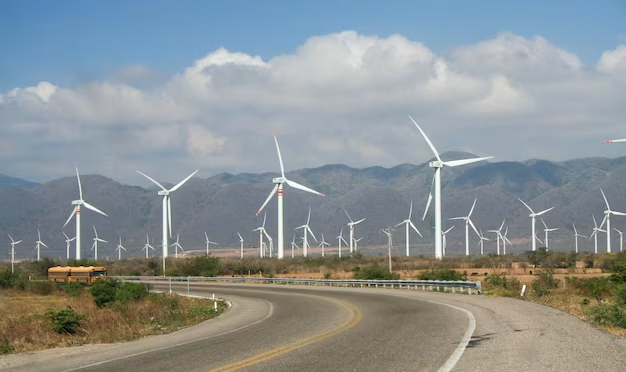
Huatulco’s electricity comes from a combination of sources—solar, hydroelectric, geothermal, and fossil fuels—but by far the largest contributor is wind. Think about it: have you ever seen any power-generating plants nearby?

La Ventosa
Huatulco gets almost all its power from the La Ventosa Wind Farm near the municipality of Juchitán de Zaragoza—its full name is Parque Eólico La Ventosa. The name makes sense, sort of: viento means wind, and ventosa translates to “windy” (or, as Google Translate might amusingly suggest, “sucker”).

This is one of the windiest stretches of highway in Mexico. Tractor-trailers are known to tip over in gusts reaching 90 km/h (55 mph). In February 2022, nine rigs rolled along this stretch of federal highway, and during a cold front in January 2025, gusts hit 110 km/h (68 mph).

These intense winds, locally known as El Tehuantepecer, Vientos Tehuanos, or Tehuantepecanos, originate north and east of the Isthmus in the Bay of Campeche on the Gulf of Mexico. They sweep southwest through the narrow Chivela Pass—at an elevation of just 225 meters (735 feet)—funneling and concentrating cool, dry air that collides with the hot air of the Juchitán region. This section of land is the second narrowest part of the Western Hemisphere, after Panama.

The wind farm consists of 104 turbines that generate 85 megawatts of electrical energy. Built by the Spanish company Iberdrola Renovables, it opened on November 10, 1994. Production has likely increased since Kathy Taylor, one of The Eye’s early writers, covered the project back in 2012 (www.theeyehuatulco.com/2012/01/01/going-green-in-huatulco). Of course, wind turbines aren’t maintenance-free. Regular inspections involve lubrication, cleaning, and repairs to gearboxes and electrical components.

For comparison, the Revolution Wind Farm off the coast of Rhode Island—built by Ørsted, a Danish government–majority-owned firm—will generate 400 MW for Rhode Island and 304 MW for Connecticut once completed. It will consist of 65 turbines located about 15 nautical miles offshore.

Solar Power
Although there are hot springs in the municipality of San Miguel del Puerto, Huatulco has no local source of geothermal power. Hydroelectric and fossil-fuel plants operate elsewhere in Oaxaca, feeding into the national power grid through substations.

Solar power, however, is a readily available and practical solution for those living off the grid—such as in Playa El Mojón. Electricity supplied by the federal government (Comisión Federal de Electricidad, or CFE) is expensive in Huatulco. The CFE billing system uses three tiers, with rates increasing as consumption rises. Once you exceed a higher tier, it takes several billing cycles of reduced use to return to the lower rate.

Casa Flores Bellas
In 2015, faced with Huatulco’s hot climate, the occasional sticky Tehuantepecers, and a sky-high third-tier power bill, we decided to install a solar system. Our system feeds energy back into the CFE grid, which credits us kilowatt for kilowatt on our bill.

The setup includes 14 panels and a Fronius IG Plus inverter, powering three A/C units, the refrigerator, and the pool pump (recently replaced with a more efficient model). Our contractor handled all the paperwork for the CFE tie-in.

The total generating capacity is 3,780 watts, with an average daily production of 15,120 watts. The cost of the photovoltaic generator and panels was $7,808.31 USD (at an exchange rate of 16.72 pesos per dollar), plus 10,000 pesos (about $600 USD) for the roof-mounted frame. We got two bids—the other was for 32,000 pesos for the frame—so we chose wisely.

We began the process soon after arriving on the coast in November 2015. The Fronius inverter, presumably imported from Austria, and the Chinese-made panels were delayed in arriving through the port of Salina Cruz. It took five months to complete and activate the system—waiting for parts, contractors, and, finally, the CFE hookup, which happened the day before we returned to the U.S.

In the end, it was one of the smartest decisions we’ve made. We rarely exceed our system’s capacity, and our bimonthly bill now averages just 45 pesos (about $2.50 USD).

Last year, we noticed construction of a small solar field in upscale Conejos but couldn’t find details on cost, permits, or end users. Driving around town, though, you’ll see solar panels popping up on many new rooftops.

Ironically, installing a similar system wouldn’t be cost-effective for us in sunny northern Nevada. Go figure. Go Mexico!

PEMEX and President Claudia Sheinbaum

By Julie Etra

As this issue explores Mexico’s president one year after her remarkable rise to the presidency, I decided to write about one of the many challenges she faces: a perpetually lingering, decades-old economic problem — PEMEX and its viability.

First, a little background. The acronym stands for Petróleos Mexicanos. For a detailed, in-depth analysis of its origins, see the 2022 The Eye archives: https://theeyehuatulco.com/2022/03/28/politics-petroleum-and-the-environmenthow-to-doom-your-countrys-climate-targets. This excellent article was by Deborah van Hoewyk, who sadly recently passed away. Deborah was a long-time contributor to The Eye and a scholar in her own right (a tribute to her by Randy Jackson is included in this issue).

To quote Deborah’s article: “Before expropriation, there were 17 international firms producing oil in Mexico, dominated by the Mexican Eagle Company (a subsidiary of the Royal Dutch/Shell Company, now just ‘Shell’) and various U.S. firms (Jersey Standard, a branch of Standard Oil, and Standard Oil Company of California, SOCAL, now Chevron); together the Dutch and the Americans (basically, the Rockefellers) controlled 90% of the production of Mexican oil; Gulf Oil added another 5%.”

In 1938, President Lázaro Cárdenas expropriated foreign oil assets and created a state oil monopoly. Mexico’s major new refinery project, Olmeca (often called Dos Bocas), is located in Paraíso, Tabasco; it is designed for 340,000 barrels per day and to produce ultra-low-sulfur fuels.

What propelled expropriation was a union strike against the international petroleum consortium and the refusal of foreign companies to accept new contract terms—an inflection point that reshaped Mexico’s energy sector.

PEMEX’s solvency has been a persistent issue, in part because government budgets long relied on PEMEX revenues for far more than exploration, refining, storage, distribution, and maintenance. Expectations were high—perhaps unrealistically so.

President Enrique Peña Nieto’s 2013 energy reform amended the Constitution to allow private participation across the sector; it did not privatize PEMEX. Subsequent policy under Andrés Manuel López Obrador (AMLO) reasserted a larger state role and increased support for PEMEX, while also emphasizing “energy sovereignty.”

PEMEX’s profitability remains complex. Factors include insufficient new exploration, aging and poorly maintained infrastructure, spills, vandalism, corruption, and long-term production declines — along with exposure to oil-price cycles. Above all, debt is the headline problem: around US$100 billion in financial debt, with more than US$20 billion owed to suppliers, making PEMEX the world’s most-indebted oil company.

Fuel theft, called huachicol, is a major drag. Recent cases underscore its scale: on Sept. 8, 2025, authorities announced 14 arrests, including customs officials, businesspeople, and members of the armed forces, in a probe into a fuel-smuggling network; in parallel enforcement, authorities have reported large seizures of stolen diesel.

So, what is the Sheinbaum administration proposing?

1) Energy security + cleaner mix.
Mexico imports significant volumes of U.S. natural gas via pipelines from Texas, much of it used for power generation. The administration has signaled plans to bolster domestic gas output while pushing renewables, like solar and wind, and exploring strategic inputs such as lithium for batteries, alongside a national energy plan to expand generation capacity toward 2030.

2) Tax and debt overhauls.
In late 2024, the government simplified PEMEX’s fiscal regime to a single levy, the Derecho Petrolero para el Bienestar (roughly 30% on oil and ~11.6–12% on non-associated gas in 2025), explicitly to reduce PEMEX’s historic tax burden and allow more investment. A broader 10-year plan (2025–2035) aims to lower debt, reprofile maturities, and gradually phase out federal financial support by 2027—a pledge reiterated in August–September 2025 as the government arranged bond issues and buybacks tied to a debt-management strategy.

3) Anti-corruption enforcement.
President Sheinbaum recently said former PEMEX CEO Carlos Treviño was arrested in the U.S. and would be deported to Mexico to face corruption charges linked to the Odebrecht/Braskem case—an extradition request pending for about five years.

Separately, U.S. authorities in August 2025 indicted two Mexico-based businessmen over alleged bribes to obtain PEMEX contracts.

Given the ambition of the 10-year plan and the 2027 support “off-ramp,” it will be worth revisiting this in 2027, when federal support is slated to cease. As Sheinbaum put it: the goal is for PEMEX to stand on its own by 2027.


Cactus Fruits

By Julie Etra

For starters, let’s be clear: all cacti flower and produce fruit if their flowers are pollinated. But that doesn’t mean all cactus fruits are edible — or tasty by human standards. And there are a lot of cactus species (family Cactaceae) in Mexico and the southwestern United States.

Tuna
The most common edible cactus fruit comes from the nopal cactus (Opuntia ficus-indica), known in Mexico as “tuna” — no relation to the fish (atún). In English, they’re called prickly pear cactus, and yes, they are spiny. The nopal is the most widely distributed and economically important cactus in Mexico and appears symbolically on the Mexican flag: a golden eagle perched on a nopal pad (penca). Its tender shoots and fruits are eaten throughout the country.

It’s also a common genus in the southwestern U.S., including the Mojave and Sonoran deserts and the Great Basin. There are numerous varieties of nopal; one source suggests 220 species of Opuntia, with 60–90 in Mexico. In Plantas Mexicanas: Catálogo de nombres vulgares y científicos (Martínez, M. 1979. Fondo de Cultura Económica), I counted 31 species of Opuntia. I didn’t research how many, beyond O. ficus-indica, are widely consumed in Mexico.

The red and white prickly pear fruits are the most popular, with white tuna being the most recognized nationwide. They grow throughout much of central and northern Mexico, flowering and fruiting from April to October. Both red and white varieties are loaded with seeds — making prickly pear jam a true labor of love (I’ve done it exactly once!). Look for delicious tuna nieves (ices) and aguas (fruit drinks) at the Mercado Orgánico de Huatulco and elsewhere. Prickly pear candy is another product, and in Arizona, you can even find a lollipop shaped like a prickly pear.

By the way, nopal pencas have been a staple of the Mexican diet for centuries. The plant has been bred so that cultivated varieties have fewer spines; farms around Huatulco commonly grow these. Walk by Los Parados along Carrizal in the morning, or elsewhere in La Crucecita, and you’ll see people peeling and slicing the pads for salsas and tacos. They’re highly nutritious.

Xoconostle
Another edible cactus fruit is the xoconostle (Opuntia joconostle), whose name comes from Náhuatl: “xococ” means sour or bitter, and “nochtli” is the word for the fruit (tuna). True to its name, it’s distinctly bitter and commonly used in stews, sauces, and moles. The taxonomy can get confusing, as I discovered in Plantas Mexicanas.

Pitaya
This fruit is known in English as dragon fruit, and in Mexico as pitaya, pitayas, or pitahayas. The word derives from an Antillean (Caribbean) language meaning “scaly.” The plant itself is a large, candelabra-like, drooping cactus with thick, fleshy branches.

Pitaya refers to the fruit rather than the specific plant; there are 23 entries for pitaya in Plantas Mexicanas. The main species are Selenicereus undatus and Stenocereus queretaroensis (the genus was formerly Hylocereus). Unlike nopal, this cactus is spineless. It’s native to southern Mexico, Guatemala’s Pacific coast, Costa Rica, and El Salvador.

The flesh is rich in vitamin C, iron, calcium, phosphorus, and fructose. Pitaya is versatile — used in smoothies, juices, and jams.

Biznaga
Biznaga is the common name for barrel cacti, and there are 26 references to it in Plantas Mexicanas. These squat, round, barrel-shaped cacti get their name from the Náhuatl “huitznáhuac” (surrounded by spines), which became “biznaga” when adopted into Spanish (and yes, the Spanish struggled with Náhuatl pronunciation — as do I).

There’s more than one genus of biznaga, and the edible species is most likely Ferocactus wislizenii (fishhook cactus), which produces small pineapple-like fruits called guamiche — known as the “drunken” fruit because they can ferment naturally as they ripen. Native to northern Mexico and the southwestern U.S., they’re quite distinctive.

Another notable barrel cactus is Echinocactus platyacanthus, known as the giant barrel cactus, golden barrel cactus, giant viznaga, or biznaga de dulce. Its Náhuatl name is huitzli nahual. Native to central Mexico and the Chihuahuan desert, its spongy pith is boiled and crystallized to make acitrón, a traditional Mexican candy.

However, due to overexploitation, biznagas are now endangered, and it’s illegal to harvest them — plus, their preparation is complicated. Like most cacti, they grow extremely slowly: young plants can grow about an inch per year, but growth slows with age.

The red biznaga (Ferocactus histrix), also called acitrón barrel cactus (biznaga barril de acitrón), yields a delicacy called cabuches (aka chilitos) — tender buds of the fruit, collected at precisely the right moment. These buds, found in the highlands of San Luis Potosí and near Matehuala, look like colorful asparagus tips and taste a bit like tiny artichokes. Needless to say, they’re hard to collect thanks to the long protective spines.

A third, less common barrel cactus genus is Melocactus, known as the Turk’s cap cactus. Its tiny fruits aren’t significant in the Mexican diet or culture, but they resemble chiltepin peppers — the wild chiles found throughout Mexico — though they aren’t spicy.

Garambullo
There are nine references to garambullo in Plantas Mexicanas. The garambullo cactus most associated with edible fruits is likely Myrtillocactus schenckii, native to Oaxaca, Chiapas, and Puebla, or M. geometrizans. The small, sweet red or purple fruits can be juiced for aguas, jams, and nieves. While it makes an effective dye, processing it in quantity is tedious.

Zapotitlán Salinas, a pueblo in Puebla, is renowned for its alcoholic beverage made from macerated M. geometrizans fruits. Small quantities of the fruit are found in local markets in Mexico’s arid regions, where they’re said to taste like blueberries.

Whether enjoyed fresh, candied, juiced, or preserved, cactus fruits are deeply woven into Mexico’s culinary and cultural landscape. Their diversity reflects the country’s rich biodiversity and traditions — a reminder that even the most unassuming plants hold surprising flavors, stories, and significance.

Valles Centrales

By Julie Etra

The Central Valleys (Spanish: Valles Centrales) of Oaxaca—also known as the Oaxaca Valley—are a geographic region encompassing the municipalities of Etla, Centro, Zaachila, Zimatlán, Ocotlán, Tlacolula, and Ejutla. This area is home to important and well-known archaeological and cultural sites, including Monte Albán, Tule, and Mitla, as well as lesser-visited sites such as Yagul and the Guilá Naquitz Cave.

The cave is especially notable as the verified birthplace of the oldest distinctly recognizable ancestor of modern annual corn: teosinte, a perennial grass with tiny mazorcas (corn ears) about the size of a slender finger. More on that in a bit.

Geography and Climate
The Y-shaped valley lies at the intersection of two major Oaxacan mountain ranges: the Sierra Madre del Sur and the Sierra Madre de Oaxaca (colloquially known as the Sierra Norte), which is an extension of the larger Sierra Madre Oriental. (Sierra means “mountain range.” For context, I live on the eastern side of the Sierra Nevada in northern Nevada—which, once upon a time, was part of Mexico.)

Oaxaca City sits at the heart of the valley at an average elevation of 1,550 meters (5,115 feet). With access to water from the Río Atoyac and Río Salado (though not in great shape today), the area has long been attractive for settlement. The valley spans more than 3,375 square kilometers (1,303 square miles), with about 1,100 km² (700 mi²) of arable land—by far the largest stretch of flat, farmable land in this mountainous state.

The Tlacolula Valley stretches 50 kilometers (31 miles) east, the Zimatlán Valley runs 100 kilometers (62 miles) south, and the Etla Valley extends 40 kilometers (25 miles) northwest.

The climate is subtropical highland, with warm temperatures year-round—something that often surprises winter visitors. Rainy and dry seasons are distinct, much like the coast, though less extreme. The valley averages about 69.5 cm (27.4 inches) of rainfall per year. Winter temperatures hover around 17°C (63°F) in November through January, rising to around 22°C (72°F) from May through August.

Geology
The Valley of Oaxaca has an ancient and complex geology. It features a mix of Precambrian metamorphic rocks (dating back 4.6 billion to 541 million years), Mesozoic sedimentary layers (252 to 66 million years ago), and Tertiary igneous rocks (66 million to 2.6 million years ago).

The valley floor is composed of gneisses (coarse to medium-grained metamorphic rocks) and mylonites (fine-grained rocks found along fault zones). Surface rocks include schists, granodiorite, and limestones, the latter indicating the presence of an inland lake or sea in the distant past. Sediment from surrounding mountain erosion has also filled much of the valley.

This is a tectonically active zone—part of the Oaxaca Fault System, where the Cocos Plate subducts beneath the North American Plate along the Middle American Trench. That’s why Oaxaca is so seismically active: about 25% of all earthquakes in Mexico occur here. The January 14, 1931, earthquake, which registered 8.0 on the Richter scale, flattened the city.
Further reading:
http://www.wiki.santafe.edu/images/4/45/Ch3-1.pdf

Economy
Besides tourism and crafts (alebrijes, ceramics, textiles), the valley continues to support extensive agriculture. Crops include corn, sorghum, beans, wheat, melon, watermelon, garbanzo beans, and of course, agave (maguey) for mezcal production. Corn remains the most culturally and economically significant crop.

Today, you’ll also see large greenhouses growing ornamental plants—visible when flying in with Aerotucán or driving into the valley from the south via Highway 175. Flowers such as flor de cempasúchil (marigolds, genus Tagetes), flor de borla or cresta de gallo (Celosia argentea, aka cockscombs), and terciopelo (velvet flower) are cultivated for Day of the Dead altars (ofrendas). Roses are also grown here and sold in markets, including those in La Crucecita.

Important
Archaeological Sites

Yagul
Located midway between Oaxaca City and Mitla on Highway 190, Yagul is a former Zapotec city-state first settled around 500–100 BCE. It remained occupied up through the Spanish conquest. The name “Yagul” is Zapotec: ya means tree and gul means old—“old tree.” (What specific tree? That remains a mystery.)

Excavated in the 1950s and 60s by archaeologists Ignacio Bernal and John Paddock, Yagul is built around a hill and includes a large ball court, palaces, temples, and tombs. Building materials included cobbles from the Río Salado and volcanic rock like basalt. The community likely reached its peak between 1250 and 1521 CE. After the conquest, much of the population relocated to nearby Tlacolula, which now hosts a well-known and colorful market.

Guilá Naquitz Cave
This site is particularly close to my heart. Back in the 1980s, as a student at Colorado State University, we had a few teosinte plants on the university farm. As a grad student, one of my jobs was to help propagate heirloom corn (maíz criollo) seeds to preserve their genetic integrity. Years later, DNA mapping confirmed that teosinte was indeed the ancestor of modern corn—and that it originated here, in Oaxaca.

Guilá Naquitz Cave (Zapotec for “white cave”) is located about 5 km (3.1 mi) northwest of Mitla, likely in a limestone outcrop. This site is of enormous ethnobotanical and paleobotanical importance, documenting the early domestication of crops like teosinte, squash (Cucurbita spp.), bottle gourds (Lagenaria siceraria), and beans.

Inhabited as early as 10,000 years ago, the area once supported a rich variety of edible plants consumed by hunter-gatherers—acorns, wild fruits and berries, prickly pear cactus (tuna), agave, nuts such as yak susí (the identity of which remains unclear), wild onions, and more. Sadly, centuries of land-use change have greatly diminished this ecosystem. The cave is located at the base of a cliff at an elevation of 1,926 meters (6,319 feet).

Highlighted Communities in the Valley
Here’s a small, somewhat random selection of communities we’ve passed through on our drives to Oaxaca City:

Ejutla de Crespo
Located at the southern end of the valley, Ejutla means “place of abundant greens” in Nahuatl. “Crespo” refers to Manuel Sabino Crespo, a contemporary of Morelos during the War of Independence. The town’s economy centers on agriculture and mezcal production.

Ocotlán de Morelos
With a population of around 23,000, this town was bypassed about a decade ago when a new commercial route diverted traffic away from its bustling central square. The name Ocotlán comes from Nahuatl and means “among the ocote trees,” referring to the pine species found descending from the oak-pine woodlands above. The suffix honors José María Morelos y Pavón, Catholic priest and independence leader. Agriculture is the main economic driver.

San Bartolo Coyotepec
Just five kilometers (three miles) south of Oaxaca City, this town is famed for its barro negro (black clay) pottery. The shiny finish comes from polishing and specific firing techniques. There’s a wonderful little museum on the west side of the main highway. Years ago, my sister and I eavesdropped on a workshop there.

Villa de Zaachila
This town and municipality is 6 km (3.7 mi) south of Oaxaca City along Highway 131. Before the conquest, it was the main city-state after the fall of Monte Albán. The name may refer to its 14th–15th century ruler Zaachila Yoo—or it may mean “large leaf of the purslane” (Portulaca oleracea), a crunchy succulent considered a weed in the U.S. but a valued quelite in Mexico. You’ll often find verdolaga in local markets and dishes (see The Eye Archives:
http://www.theeyehuatulco.com/?s=quelites).

Cuernavaca To-do List

By Julie Etra

Robert Brady Museum

This almost overwhelming museum is located in the former home of Robert Brady, a wealthy American art collector who expatriated to Cuernavaca after being encouraged to visit Mexico—particularly Cuernavaca—by socialite and arts patron Peggy Guggenheim. She, along with other celebrities, became a lifelong friend. Born into a railroad-money family in the Midwest, Brady showed an early curiosity about art and, as a young adult with means, traveled extensively and began collecting.

In 1962, he purchased a deteriorated 16th-century monastery in Cuernavaca, which he restored and remodeled into a permanent residence. When he died in 1986, the home and its entire collection were donated to the municipality to be preserved as a museum, just as he left it. The collection is remarkable in both size and quality, with placards identifying the origin of each piece throughout the home. While much of the collection is Mexican, it’s also wonderfully eclectic—featuring art from Africa (notably the Masai), Indonesia, New Guinea, the Pacific Northwest, Haiti, India, South America, and Alaska.
http://www.museorobertbrady.com

Museo Regional Cuauhnahuac (Museo Regional de los Pueblos de Morelos)

“Cuernavaca” is a Spanish adaptation of “Cuauhnáhuac,” the original Nahuatl name used by the Tlalhuicas and Xochimilcas (and to a lesser extent the Toltecs)—and no, it doesn’t mean “horn of the cow,” as I once thought. To the Nahuatl, it meant “surrounded by trees.

The building itself is extraordinary. Construction began in 1526, just five years after the fall of Tenochtitlan, (present-day Mexico City, 65 km (40 miles) to the north), and was completed in 1531. Often referred to as the Palacio de Cortés, it was the home of Hernán Cortés and his second wife, Juana Zúñiga. It looks part fortress, part palace, and has served many purposes over the centuries. After being badly damaged in the 2017 earthquake, it reopened on March 30, 2023, with updated exhibits and structural repairs.

Now a regional museum, it includes excellent pre-Hispanic artifacts, natural history exhibits (did you know Mexico has the greatest diversity of pine trees in the world?), and a replica cuexcomate—a pre-Hispanic corn storage structure unique to Morelos. The second-floor highlight is eight murals by Diego Rivera from 1930 titled The History of Morelos: Conquest and Revolution, which are impressively preserved. There are also two oil paintings from 1938 by Spanish painter Salvador Tarazona and a mural by him on the upstairs vault.

After the post-earthquake repairs, it reopened as the Museo Nacional de Los Pueblos de Morelos (the National Museum of the Peoples of Morelos); it has a facebook page (https://www.facebook.com/p/Museo-Regional-de-los-Pueblos-de-Morelos.

Jardín Botánico y Museo de Medicina Tradicional y Herbolaría (Botanical Garden and Museum of Traditional Medicine and Herbalism)

This peaceful four-hectare garden is located on the former El Olindo estate, once home to a 19th-century summer house built for Maximilian of Habsburg (briefly Emperor of Mexico from 1864 until his execution in 1867). Called Casa de la India Bonita (House of the Beautiful Indigenous Woman), it’s now home to a lovely botanical garden focused on native and medicinal plants.

Although the museum (inside the summer house) was closed during our visit, the garden itself is thoughtfully divided by plant type. While some areas—like the medicinal plant section—could use a little extra care, most of the labels were still clear and informative. A standout was the cuajilote (Parmentiera aculeata), a small tree in the Bignoniaceae family. Its fruit and flowers grow directly from the trunk, and the fruit fibers were once used in making cuexcomates.
https://sic.gob.mx/ficha.php?table=museo&table_id=736

Sunday Night on the Plaza de Armas

We had a great view of the plaza from a second-floor restaurant in a nearby shopping complex. After dinner, we joined the action below. There were the expected food carts (this is Mexico, after all), and we tried the local version of gaspacho moreliano—a fruit salad in a cup—called excamocha.

A group of mariachis played for 300 pesos per song, and we requested two. A payaso (clown) entertained children seated in bleachers with tricks, pantomime, and acrobatics, with kids eagerly joining in. Fun fact: there are professional clown schools in Mexico! If you’re on Facebook, check out Escuela de Payasos México—it’s a serious craft.

Meanwhile, a group of teenagers played a fast-paced hybrid of hacky sack and soccer, weaving through the crowd, while adults placed bets on the outcome. It was a joyful, chaotic scene.

Xochicalco Archaeological Site and Museum

Just 30 minutes from Cuernavaca, this under-the-radar site is absolutely worth visiting. The modern museum building is thoughtfully designed to maximize natural light, reducing the need for artificial lighting.

Xochicalco, meaning “Place of the House of Flowers” in Nahuatl (xochitl = flower, calli = house, -co = place), was likely founded around 650 CE and thrived between 700–900 CE. Its mountaintop location wasn’t just for defense—it was ceremonial.

According to our guide, about 500 elite residents lived in the religious center, with another 15,000 or so spread across the lower terraces. The city featured an astronomical observatory (closed during our visit), clever drainage systems, and a massive cistern. Around 900 CE, Xochicalco was destroyed by fire and largely abandoned, though a small population remained. It was later recolonized around 1200 by the Nahuatl-speaking Tlahuica people.

Hacienda Vista Hermosa

We stayed at this restored hacienda after reading a glowing review in The New York Times last October. The article profiled several historic haciendas in central Mexico, but this one stood out for its history, location, and grounds.

Built in 1528 by none other than Hernán Cortés—he was granted the land as an encomendero—it was originally a sugar cane plantation. Like many haciendas, it was abandoned after the Mexican Revolution and agrarian reform, but has since been partially restored, likely in the 1990s (judging by the tilework, bathroom fixtures, and lack of air conditioning).

The property is stunning. With over 100 rooms, a huge pool that doubles as a fountain, stables with well-kept horses, and lush landscaping, it offers a charming (if slightly dated) getaway. We were lucky enough to get a private tour of the original dungeon—lit by cleverly designed skylights and with a hidden exit near the restaurant. Fun indeed.

Mexican Opals

By Julie Etra

Yes, Mexico mines and refines opals, primarily around Querétaro today and formerly in the state of Jalisco. Opal enthusiasts can even take tours near La Trinidad, less than 30 minutes from Tequisquiapan, to explore the region’s rich opal deposits (see Kary Vannice’s article elsewhere in this issue).

Global Distribution
Opals are found worldwide in specific geological formations, with each region producing distinct varieties. In addition to Mexico, opal mines exist in Germany, France, Spain, New Zealand, Australia, England, and Nevada, USA. Nevada opal, found in the Virgin Valley northeast of Las Vegas, is a type of fire opal, similar to the vibrant opals mined in Mexico.

The Origins of the Name
The word “opal” is derived from the Latin opalus, related to sight and light, while the Greek opallious means “to see a change of color.” Opals have been admired since ancient times, with the Roman author and naturalist Pliny the Elder describing them around 55 A.D.

In the Aztec civilization, opals were known as Vitzitziltecpa in the Nahuatl language, meaning “hummingbird stone.” The Aztecs believed opals had magical and healing properties, and these gemstones, mined in Querétaro, were often presented as tribute to the rulers of Tenochtitlán. Examples of these opals can be seen today at the Museo del Templo Mayor in Mexico City.

Legends and Myths
One of the most famous legends about opals comes from India. In Hindu mythology, the gods Brahma, Shiva, and Vishnu quarreled over a beautiful maiden. The Eternal One, tired of their bickering, transformed her into a cloud and dyed it in multiple colors to distinguish it from others. As the cloud dissolved into rain and touched the earth, it created opal—known as the “stone of a thousand colors.”

Types of Opals
Opals are classified into two main types: precious (also called noble) and common. The key difference is that precious opals exhibit a “play of color,” shifting hues depending on the angle and light, while common opals are typically translucent and lack this effect.

Precious Opal Varieties:
Black Opal: A dark-bodied opal (black, dark blue, or gray) with striking play of color.

White Opal: Light-colored (white or pale cream) with a delicate color play.

Boulder Opal: Found attached to its ironstone or sandstone host rock.

Crystal Opal: Transparent to semi-translucent with vibrant play of color.

Matrix Opal: Displays color play throughout the entire stone, not just on the surface.

Fire Opal: Translucent to transparent with red, orange, or yellow hues, often found in Mexico.

Pink Opal: A common opal variety ranging in shades of pink.

Hyalite Opal: A clear, glass-like opal with no play of color.

Dark Opal: Has a darker body tone but is not as deep as black opal.

Common Opal (also known as Potch):
– Lacks the characteristic play-of-color found in precious opal.
-Can be found in various colors, including purple, pink, blue, and green.

·Doublet and Triplet Opals:
These are assembled opals, where a thin layer of opal is bonded to a backing (doublet) or sandwiched between two pieces of resin or potch (triplet).

Opal Formation
Opals are formed through volcanic activity and are composed of a silica-based gel that can contain up to 10% water. Silica, a compound of silicon and oxygen, is also found in quartz crystals and beach sand.

Opal formation is associated with geothermal activity—hot springs and geysers bring silica-rich water to the surface, where it settles into cracks and fissures, gradually hardening into layers. Opals most commonly form in rocks such as:

Limonite: An iron ore.
Sandstone: A sedimentary rock.
Marl: A light-colored, carbonate-rich mud found in freshwater and marine environments.
Rhyolite & Basalt: Volcanic rocks associated with Mexico’s opal deposits.

Mexican Opals
Mexico is famous for its fire opals, which range from translucent to transparent red, orange, and yellow. Despite their name, not all fire opals exhibit play of color—the term refers to their body color rather than optical effects.

Opals were prized by the Aztecs, but large-scale mining did not resume until the early 1800s, when Querétaro became a major hub for opal extraction. In the 1950s, opals were discovered northwest of Guadalajara in Jalisco, near the town of Magdalena. By the 1960s, Magdalena was surrounded by hundreds of small-scale mines. Although much of the area was mined out by the 1970s, some open-pit mining continues today, using bulldozers and backhoes to extract opals from rhyolite formations.

If you’re looking to purchase fire opals, La Crucecita offers various options—but quality varies. For expert guidance and high-quality stones, Cielito Lindo is a trusted local jeweler.

Encomienda and the Caste System in Mexico

By Julie Etra

Encomendar = Entrust

Spanish Origin
This legal system of forced labor originated in medieval Spain after the Reconquista in 1492, when King Ferdinand and Queen Isabella wrested control over Andalus (also known as Andalucia, a region of southern Spain). The system was established to extract tribute from the defeated Moors (originally from the Atlas Mountains of Morocco), many of whom were expelled to North Africa—an estimated three million people. Some returned and converted to Catholicism, becoming known as Moriscos. The system rewarded soldiers and financiers who had contributed to Spain’s conquests, including those of the Canary Islands off the coast of Africa.

Exportation to the New World and the Philippines
The encomienda system was first introduced to the newly conquered Hispaniola (present-day Dominican Republic and Haiti) in 1502 and later to Mexico and the Philippines, where it took on slight regional variations. In is 2009 study The Encomenderos of New Spain, 1521-1555, Robert Himmerich y Valencia, Associate Professor of History at the University of New Mexico provides an excellent description of the encomienda: “a grant of “a grant of the Indians of a prescribed indigenous polity, who were to provide the grantee (the encomendero) tribute in the form of commodities and service in return for protection and religious instruction.”

New Spain needed free labor for its silver mines and religious conversion efforts. Officially approved by the Spanish Crown in 1503, the system expanded southward to Spanish colonies in Central and South America and throughout the Caribbean. Initially, the right to encomienda was granted to an adelantado or encomendero, a conquistador awarded the opportunity to conquer new territories on behalf of the Spanish Crown. This system was later extended to adventurers, colonizers, and even municipalities. It was essentially slavery under a different name—a legal arrangement that did not allocate land or other physical resources, such as mines or haciendas, which came later. The only distinction from outright slavery was that the indigenous workers could not be sold or inherited. The adelantado retained 80% of acquired wealth, while the Crown received the remaining 20%.

Structure
There were 506 encomienda grants in Mexico. Though granted for life, they were not inheritable, and most reverted to the Crown upon the encomendero’s death, with small provisions made for surviving family members. The size of the population tied to a particular encomienda varied, averaging around 2,000 family units, though these units could differ in composition. Some encomiendas were much larger—for example, Hernán Cortés’s encomienda included over 23,000 family units.

Smaller encomiendas were adequate for property improvements and cultivation. They also allowed a settler to build a home, feed his family, and maintain a small entourage of salaried personal followers (paniaguados) to protect his holdings from rebellious native groups and marauding Europeans. Additionally, encomenderos were responsible for paying the parish priest.

Decline
The system was short-lived, with major reforms attempted in 1573. It was perceived as abusive and counterproductive, especially as the population of New Spain had declined drastically—from approximately 22 million in 1500 to just 3 million by 1550 due to disease and forced labor fatalities. Additionally, there were not enough licenses available to meet demand, and there were too few indigenous workers left to sustain the system. As a result, the Spanish Crown decided to place control of the conquered population directly under royal authority instead of under the powerful encomenderos. The system was officially abolished on September 17, 1721, when the issuance of new encomiendas in all of Spain’s colonies was prohibited. However, remnants of the system persisted in parts of Mexico until the early 18th century and lingered in the Yucatán Peninsula until the 1780s.

Repartimiento
The repartimiento system replaced encomienda, shifting labor control from private individuals to the Spanish colonial government. Under this system, Spanish colonists and municipalities were granted the right to extract forced but low-paid labor from local communities in conquered territories. Designed to replace the inefficient encomienda system, repartimiento was eventually limited to crucial industries such as food and textile production and precious metal mining.

For further reading, see Marcia Chaiken and Jan Chaiken’s article on slavery in Mexico on page 8.

Public Transportation in Mexico City

By Julie Etra

Pre-Hispanic Transportation
The original form of transportation in the pre-conquest city of Tenochtitlán, now modern Mexico City, was by flat-bottomed canoes called trajineras. It is unclear if there was any form of “public” transportation through the canal systems surrounding the island. Some of these canals persisted until about 1920 and continued to be used for commerce—particularly for transporting food and flowers—as well as for personal transportation. At the time, these canals and aqueducts connected the heart of the city to areas like Chalco and Xochimilco in the south. Xochimilco, and to a lesser extent Lago Nabor Carrillo, are existing remnants of the pre-conquest wetland system. Lago Nabor Carrillo, an artificial rectangular lake, is what remains of Lake Texcoco. It is hydrologically isolated, contains numerous wells, and serves as a water storage system for Mexico City.
The 20th Century
Electric trams, or tranvías as they are known in Spanish, began operating in the historic central part of the city in the 1900s. These streetcars were initially horse-drawn but were later modernized with overhead electrical lines while still using the original rail system. The Compañía de Tranvías Eléctricos de México took ownership of the city’s public transportation network in 1901. As automobiles became more popular in the 1930s, public transportation expanded to include an extensive bus system that served what were then considered the outskirts of the city, such as Coyoacán.
The newer Servicio de Transportes Eléctricos was organized in 1947 but did not completely take control of the system until 1952. Following the activation of the Metro system (see below), tram routes were gradually abandoned until the last urban tram—including the circuito histórico (historic district route)—closed in 1979.
In 1925, the wooden bus in which Frida Kahlo was traveling back to her home in Coyoacán was hit by a heavier metal tram, resulting in the severe accident that crippled the artist when she was only 18 years old.

The Metro System
After decades of relying on color-coded buses, the Mexico City Metro was first conceived in 1967. The first line opened in 1969, covering an initial route of 12.7 kilometers (7.9 miles). The system was built in response to the ever-increasing traffic of the mid-1950s, particularly in the downtown historic center, where it was often said to be faster to walk than to drive.
This rapid transit system is the second-largest in North America, following the New York City subway. As of 2015, it included 12 lines and 195 stations, with 115 of those stations underground. The deepest station lies 35 meters (115 feet) below ground. The Metro uses pneumatic (rubber) tires, which ensure a quieter and smoother ride compared to steel wheels. Many stations are named after historical figures or events, providing an educational experience along with transportation.
Engineering assistance for the Metro was provided by France, including the pneumatic technology. Construction occurred in seven phases, with the last phase completed in 2015. The design also accounted for earthquakes; rectangular structures were used instead of arches, which helped the system withstand the 8.0 earthquake of 1985 with minimal damage. During that event, the Metro was shut down to avoid electrocution and to allow for debris removal.
Excavation for the Metro yielded more than 20,000 archaeological findings, as well as fossils, including mammoth bones. During the construction of Stage 1 in the late 1960s, the Mexica Temple of Ehécatl was discovered near the future Pino Suárez station, requiring a complete redesign of the project.
You can buy a Metro Card at ticket booths and vending machines in the Metro station, from the machines in a Metrobús station, or from the ticket windows in the light rail stations. The Metro Card is rechargeable at those locations. If you have a Metro Card, you can use it for the Ecobici public bicycles – there are other ways to use the bikes, check them out on https://mexicocity.cdmx.gob.mx/e/getting-around/ecobici/.

Cablebús
Construction of an alternative public transportation system, Sistema de Transporte Público (also known as Cablebús), was announced on February 7, 2019, by then-Mayor of Mexico City and current President Claudia Sheinbaum. It began operation on July 11, 2021. This aerial cable car system features three lines and 19 stations, spanning a total of 24.75 kilometers (15.4 miles). It was developed primarily to relieve traffic congestion in high-density neighborhoods, although Line 3 offers scenic views of Chapultepec Park. The system is operated by Servicio de Transportes Eléctricos, the same agency that manages other branches of public transportation.
The fare is seven pesos ($0.34 USD), and children under five and adults over 70 ride for free. Tickets and prepaid passes are available at stations. Line 1 consists of 377 gondolas, each seating up to 10 people (weighing 75–80 kg or 165–176 lbs per person). The ride takes about 33 minutes at a speed of 21.6 kilometers (13.4 miles) per hour. Line 3 conveniently connects to Line 7 of the Metro system.

The detachable gondolas, manufactured by the Swiss company CWA Construction, feature foldable wooden seats that allow entry for bicycles and walkers. Ventilation systems are located in the lower part of the cabin, eliminating the need for air conditioning during the summer. Additionally, the gondolas include interior and exterior lighting, Wi-Fi, surveillance cameras, and anti-vandalism technology.
We plan to visit Mexico City in late February 2025 and will share our personal experience of using the Cablebús system. The views of the city from this modern, rapid, and efficient mode of transportation should be spectacular, especially on a clear day.