Tag Archives: chaiken

Antivenom Production in Mexico

By Marcia Chaiken and Jan Chaiken

Epidemiologists around the globe agree that bites from venomous snakes constitute a major worldwide health problem. The World Health Organization reports that over two million people are envenomated by snakes annually, resulting in approximately 100,000 deaths and four times as many permanent disabilities. Although data on snake bites are known to be underestimates of the true incidence, a study of medical records from 2010 to 2022 in Mexico found that 10,420 cases had been registered.

The Venomous Snakes of Mexico

There are approximately 400 species of indigenous snakes in Mexico. Three taxonomic groups are venomous: vipers including rattlesnakes, coral snakes, and sea snakes. These biological families consist of numerous species that are indigenous in specific Mexican regions. For example, in the state of Aguascalientes, there are seven indigenous species of venomous snakes: one species of coral snake and six species of rattlesnakes, including the enormous Crotalus basilicus. In addition, in the northern and southern border areas there are other venomous biters that have illegally crossed international lines, such as the copperhead, predominantly found in the United States. Although none of these snakes hunt for human prey, if accidentally disturbed they can strike with disastrous effects.

The venoms from different species are not composed of exactly the same proteins and toxins, so the effects of bites can vary. But in general, rattlesnake venom causes excessive bleeding, the death of tissue around the bite, neurological damage ranging from tingling to paralysis, and comas or kidney, respiratory, and heart failure, possibly leading to death. Coral snake venom can be even more toxic than that of the rattlesnake.

The Only Remedy?  Antivenom

There are a host of folk remedies for snake bites, but none are advisable. The only medically approved treatment is a dose of antivenom. Antivenom was first developed in France over a century ago, based essentially on the same research and treatment developed by Louis Pasteur in his work on combatting smallpox and rabies. Basically, a nonhuman mammal is repetitively injected with small doses of a toxin, venom or other disease-causing substance, with the result that the animal’s immune system produces antibodies that essentially neutralize the virulent invader. A relatively small portion of blood is removed from the immunized animal, and the serum in the blood that contains the antibodies is separated and used to inject humans who have been envenomated. The antibodies in the serum counteract the venom. The animals used for research are often mice – but for practical production of antivenom, horses have been used for decades to produce enough serum for medical purposes.

The problem remains, however, that the effectiveness of the antibodies produced is dependent on the specific venom received during a bite. Because different species of snakes produce venom with chemically distinct properties, the antibodies that are formed in response to venom from one species may be ineffective in combatting venom from another species. In the 1990s, faced with this reality and the need for increased supplies of antivenom (for scorpion and black widow spider bites as well as for snake bites), Mexico revolutionized the antivenom industry by establishing a number of large horse farms entirely devoted to producing sera containing diverse antibodies.

Antivenom Production in Mexico

Three Mexican companies compete in this enterprise: Instituto Biocion, Inosan Biopharma, and BIRMEX, all headquartered in Mexico. They are aided by research conducted at the Institute of Biotechnology at Mexico’s National Autonomous University (UNAM), which houses a large herpetarium with over 60 species of venomous snakes from around the world. Each pharmaceutical company runs its own horse farms. One farm, the Ojo de Agua Ranch in Puebla, has over 160 Criollo horses; its work has received much publicity, but the production process appears similar throughout the industry.

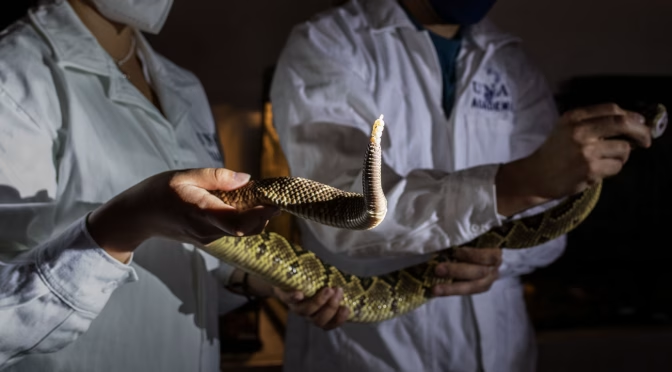
The snakes are “milked” for their venom by electrical stimulation or by carefully guiding them to bite down on the porous cover of a specialized sterilized container. The venom naturally flows from the venom glands into the container and then is stored in vials for injection. Horses are injected with small doses of venom from multiple types of venomous snakes for approximately six months or until the antibodies produced in reaction to the venom reach a designated concentration. The horses are then periodically bled, removing several liters of blood. The antibody-rich plasma is separated from the rest of the blood, and the blood without the plasma is transfused back into the same horse. If you have ever donated blood or received a blood transfusion, you know that, except for the initial needle prick, this is a painless procedure.

Up to this point, antivenom production is carried out in much the same way it has been for over a century. However, the collected horse serum naturally contains, in addition to the desirable antibodies, components to which humans are allergic. So pharmaceutical companies conduct research and develop processes for ridding the serum of components that produce negative reactions in humans. The process has reached the point where the ever-vigilant US FDA has approved several products.

Other research being carried out by the current antivenom companies focuses on ways to enhance the shelf life and stability of antivenom medications, ways to standardize the amount of antibodies in a given dose, the mechanism through which the antibodies neutralize the toxicity of the venom, and perhaps in the near future, ways to produce the antivenom antibodies in vitro rather than using horses as an intermediate step. The companies are also studying the possibility of using some components of venom for treating diseases. For more about this, see the article in this issue by Kary Vannice.

Although Mexico is one of the leading countries in the production of antivenom, the best way to deal with venomous snake bites here is to avoid them. Pay attention to signs advising caution on hiking trails. Be aware that construction sites are disturbing indigenous critters and send snakes on the run (actually, a determined slither). And most snakes, venomous or not, are more likely to be on the move in the rain. If you have an encounter of the toxic kind, call for help to rapidly move you to the nearest health clinic and then thank the horse that provided you with lifesaving antibody-rich serum.

Drinking Water in Mexico

By Marcia Chaiken and Jan Chaiken

“Can I drink the water?” is a common question asked by tourists and travelers in Mexico. Decades ago, in the early 1970’s, in Mexico, as in many other places in the world, the answer was generally, “Stick to soda or beer right from the bottle.” At that time during our early visits to Mexico. “And what about ice?” we would ask, as many tourists still do. “Never drink liquor or soft drinks with ice,” we were advised.

The penalty for not heeding this advice often occurred a few hours later. The dreaded travelers’ diarrhea variously called Montezuma’s revenge (or other names such as Delhi Belly according to location), and accompanied with cramps and necessitating frequent trips to the bathroom, felled many visitors. Sometimes the cause was bacterial or viral contamination in the water or ice, but frequently the cause was simply that the concentration of minerals in the water was different from what was customary to the travelers’ gastrointestinal tracts. You may have noticed this if you have welcomed visitors from Mexico to the United States or Canada, and they experienced similar symptoms.

The Garrafon – Bottled Water, Better Water

Over time, the questions about drinking water stayed the same in Mexico, but the answers changed. Perhaps the largest shift in the question and answer for drinking water occurred in the late 1980’s and throughout the 1990’s, when bottled water became available and popular throughout Mexico and the larger world. The sight of garrafones – large water jugs – filled with purified water and outfitted with a hand pump became ubiquitous in the kitchens and common areas of hotels and rental units. Ice was frozen from garrafon water in small inns, and hotels purchased large bags of ice made from purified water. A covered pitcher of water from a garrafon with a couple of glasses were often left on tourists’ bedside tables.

But then the plastic-bottle craze swept the world. From small bottles of purified water that barely quenched an ordinary thirst to large bottles that required herculean strength to transport, drinking water gradually filled many shelves in tiny bodegas in rural villages and in huge city supermarkets.

Drink Enough to Avoid Dehydration

Today, advice about drinking water in Mexico is generally “Drink water with every meal and whenever you’re thirsty – but leave the single-use plastic bottles on the shelf.” This advice is based primarily on two factors: the health of the humans drinking the water and the health of the planet. Over 60% of our bodies are composed of water. Water is needed by virtually every organ in our bodies. We are constantly eliminating water from our bodies in trips to the bathroom and between (by perspiring and breathing). We need to replenish our water levels frequently in warm climates. Even a minor lack of water or dehydration can result in very unpleasant symptoms – headaches, cramps, and even high fevers.

Travelers to Mexico who arrive by plane should be aware that they are likely to arrive dehydrated unless they take full advantage of the free purified water served on the plane. The very low humidity onboard and the difference in air pressure act to deplete the water in bodies. Drinking alcohol has a diuretic effect (more frequent trips to the bathroom) and further dehydration. So seriously consider asking the cabin attendants for agua rather than cerveza or vino. And when they come through the aisles with cups of water, grab one. You’ll feel much better when you land fully hydrated.

Upon reaching your Mexico vacation destination, keep drinking water. Although a common assumption is that adults need eight glasses each day, there’s actually a range of individual needs determined by gender, body weight, health status and notably environment. Obviously high temperatures result in more perspiration – so if you’re vacationing in Mexico’s wonderful beach towns and resorts or exploring architectural ruins in the jungle, you’ll need to drink more water (unless you ordinarily live in a tropical climate). High altitudes also lead to fast water elimination, so if you’re in Mexico City or another mountainous area, your drinking water needs will also increase. Exactly how much you should drink is not easily answered, but drinking enough water can be simply gauged by paying attention to how frequently you’re thirsty. If you find you’re often thirsty, start drinking more and more frequently until you find you’re rarely experiencing a dry mouth and throat.

Don’t worry about drinking too much water; cases of water toxicity (hyponatremia) are extremely rare in healthy people and have been mainly attributable to athletes who have decided to dramatically increase their water intake to as much as 6 liters in three hours before a race. You can monitor whether you’re under- or overdoing the drinking water by the color of your pee: if it’s a deep yellow, drink more; if it’s almost clear, drink less. On the other hand, excessive perspiration and more frequent urination can result in an imbalance of salt and other minerals essential for life – easy to remedy by taking a daily vitamin/mineral pill and if needed downing a bottle of electrolyte water available in most Mexican supermarkets – but given the sugar or other sweeteners added, it’s best not to make a habit of electrolyte water.

You’re Good, But All Those Plastic Bottles???

Okay, you’re convinced to drink more water in Mexico. But where can you get a safe supply? For the sake of the health of the world, please don’t get your needed daily intake of drinking water from the little plastic bottles supplied by many hotels in Mexico, sold in restaurants and stocked in an obvious place in many Mexican groceries. One good environmental way of handling your water needs is to bring your own empty water bottle; after you’ve passed through security, head to the nearest water fountain and fill your bottle for drinking after you’ve landed and before you reach your lodging. At top-tier hotels and restaurants you can almost always be sure the water served is safe to drink and ice is made from purified water –and you can ask your server to refill your water bottle for when you’re off to the beach or a day trip.

Staying Good with the Water

If you’re not sure about the water in your less expensive hotel – use their garrafon or head to the nearest market and buy the biggest bottle of water you can carry back to your room. The larger the bottle, the less expensive the water per milliliter and the greater chance the bottle can be recycled. There are many reputable brands such as Bonafont, Ciel and Epura, owned by Coca-Cola.

If you’re staying in a condo – ask the owner about the quality of water. If it can’t be guaranteed as safe, the owner will likely provide a garrafon of water – sometimes at an extra cost but a worthwhile expense. If you’re staying in an area that was developed by FONATUR (the federal agency in charge of increasing tourism), chances are a water purification system was set up for the whole area. Where we stay in Huatulco, not only is there municipal water purification but the condo association has its own secondary purification system, and the refrigerator water dispenser has a filter – so we’re largely independent of store-purchased water.

If you’re planning on traveling to rural undeveloped areas in Mexico – places where water comes from a river where clothes are washed, people bathe, and sewage seeps in, bring packs of your favorite teas and just drink water that has been boiled. No need to ask for ice because there’s probably none to be found. But if you’re vacationing in the many beautiful places in Mexico where foreigners usually hang out, enjoy your margaritas and cervezas but remember – in addition to the good-time drinks, be sure to drink water.


Mexican Films Streaming on your TV

By Marcia Chaiken and Jan Chaiken

Those of us who love Mexican cinema but spend months away from Mexico have an excellent source for fulfilling our yen for Mexican film – namely, Netflix. The films available for streaming on Netflix come and go, and differ from country to country, but there are always ample choices. For primarily English speakers the subtitles available on Netflix offer an easier experience than seeing the movie in Mexico.

Some of the best known films that have won worldwide acclaim are 100% Mexican, including geographical location, direction, casting, Spanish language, and especially creative imagination. An excellent relatively recent example is the 2018 dramatic film Roma, directed by Alfonso Cuarón. Winning many international awards, Roma accurately depicts a well-known neighborhood of Mexico City in the 1970s.

Other Netflix films that we consider Mexican have Mexican directors who are internationally acclaimed but take place only partially in Mexico. One such film is the 2006 psychological thriller Babel, directed by Alejandro Gonzáles Iñarritu. In addition to Spanish, Babel includes seven other spoken languages, plus Japanese sign language. Two top-notch films, Pan’s Labyrinth (2006) and The Shape of Water (2017), can only be considered Mexican by virtue of their director, Guillermo del Toro. Del Toro’s films are literally fantastic, compelling, and so rooted in an imagination shaped by his childhood in Guadalajara that we would call them Mexican even though some might argue with that classification. On the other hand, the film Gravity (2013), although also directed by Alfonso Cuarón, seems more American than Mexican.

But enough about the blockbusters. The films that we have been most enjoying on Netflix are little, low-budget glimpses into solidly Mexican characters in recognizably Mexican locations. We both liked the 2023 film Familia, directed by Rodrigo García. Filmed in the Valle de Guadalupe in Ensenada, the action takes place in a single day in the home and olive grove of the patriarch of a three-generation dispersed family. We learn that the family gets together once a month for comida, but at this gathering everyone’s life is so suddenly changing that difficult decisions must be made. The characters are complex and charming, even when they become irritated with each other. Gradually, by listening to their conversations around the table, you realize the depth and substance of each family member and their relationships. By the end of the film, as most characters leave, you know you’re going to miss them.

Marcia liked Where the Tracks End (El Ultimo Vagon, 2023, directed by Ernesto Contreras), while Jan thought it was a snooze. The film predominantly takes place in an abandoned railroad car, fitted out as a schoolhouse. It is slow-moving but charmingly develops the relationship between a child of an itinerant railroad track layer and a teacher whose whole life is dedicated to educating some of the most impoverished children in Mexico. There are both tragic and comic moments, and the film unabashedly pulls at your heart strings. The ending provides a satisfying twist.

The film Tell Me When (Dime Cuando Tú, 2020, directed by Gerardo Gatica González) is a light, feel-good movie about a young man living in Los Angeles. His grandfather leaves him a list of experiences that the grandson is urged to complete in Mexico City. Most of the film takes place in iconic areas in CDMX and focuses on his determination to complete the list, including the last item (spoiler alert!) falling in love. But don’t expect a Hollywood ending: it’s a Mexican film after all.

There are plenty of Mexican films on Netflix to keep us happily watching for many years, but confining ourselves to Netflix would mean missing other Mexican treasures that are available on other streaming apps. Most notable are two films directed by John Huston. We first saw one of them in a cultural center in San Cristobal de las Casas, Chiapas– The Treasure of the Sierra Madre (1948, starring Humphrey Bogart). The second is The Night of the Iguana (1964, starring Richard Burton and Eva Gardner) which in Tennessee Williams’ version takes place in Acapulco but was actually filmed in Mismaloya near Puerto Vallarta (less well known at the time). But also definitely not to be missed is an early Cuarón international blockbuster Y Tu Mamá Tambien (2001). Y Tu is superficially about a road trip from Mexico City to coastal Oaxaca but also is a turn-of-this-century exploration of the concept that gender is not binary.

If you enjoy films as we do and enjoy a bit of Mexico when you’re away, just stream one of the movies we mentioned. Happy watching.


Aztec “Farm to Table” Cuisine

By Marcia Chaiken and Jan Chaiken

The Aztecs, or as they called themselves, the Mexica, ardently embraced the style of cuisine that we currently call “farm to table.” When they first settled the area that has become Mexico City, the geography was ideal for protection from enemies – swampy land kept flooded by five lakes of brackish water – but was hardly suitable for long-term habitation, much less farming.

The Floating Islands of Mexica Agriculture

The ingenious settlers, as described in detail by Julie Etra in The Eye (February 2023), constructed aqueducts to bring fresh water into the area and rectangular gardening plots, called chinampas, in the lakes (see “The Venice of the West,” elsewhere in this issue). The materials from which the chinampas were constructed provided rich nutrients for growing crops, and the nutrients were replenished naturally by the algae growing in the surrounding water. While the Mexica nobility owned multiple chinampas that were farmed by their servants and captive slaves, the hoi polloi were also granted garden plots, reportedly distributed as one for each family.

Produce from the Chinampas. The primary crop planted on the chinampas was maize – many varieties of corn ranging from almost white to black with a rainbow of colors in between. After the ripe ears were harvested, the kernels were soaked in a home-made clay pot in an alkaline solution of local lime (not the fruit, but limestone, which is composed of organic fossils). The soaking softened the kernels and enriched them with health-enhancing minerals. This process, called nixtamalization, is still used in Mexico today. The corn was then thoroughly washed, dried and ground, always by women, on a grinding slab, or metate, using a stone pestle, or mano. As still happens today, the ground corn was used to make dough (masa) for tortillas or tamales. Corn smut, or huitlacoche, a fungus that grows between the kernels of corn, was harvested and used as a delicacy, as were other naturally occurring edible mushrooms.

Other crops grown on the chinampas were beans, pumpkins and other squash, and many varieties of chiles, including the precursor of the modern-day poblano. Amaranth and chia, both pseudo-grains (actually seeds) were part of the ordinary produce. Small sweet tomatoes were a common crop, as were herbs and spices that were cultivated from wild progenitors such as culantro – a pungent variety of cilantro – and others that are familiar today, including epazote, hoja santa, and annato bushes, which produced achiote. Spices were ground in a stone molcajete using another stone – implements resembling a mortar and pestle. Dishes could also be cooked and served in large molcajetes, and since the stone retains the flavors of spices, subsequent uses of the same implement instantly provided flavor to the dish being prepared.

Fish and Game. While maize prepared in different incarnations was the primary farm-to-family staple, the lakes provided tasty protein supplements. Fish and crustaceans were frequent dietary additions, and algae, especially the blue-green spirulina, were harvested from the water and shaped into nutrient-rich cakes and baked. Wild land animals also were caught and cooked – mainly in casseroles – including iguanas, gophers, salamanders, and the occasional deer that came to eat crops but instead were eaten.

Insects. Particular insects became favorites for adding crunch and flavor to foods. Grasshoppers, or chapulines, were a popular addition and another source of protein. Chicatanas, or flying ants that take to the air after the first spring rains and literally fall from the sky, may have been included as a treat, but their habitat is more closely allied to the Oaxaca area, where the Zapotecs lived, than to the Aztec territory. Prized for their taste and actually farmed in the local waters by the Mexica were the eggs of the water fly, or ahuautle. They are a seasonal treat and most abundant during the summer months; the Aztecs spread woven mats slightly under the water in areas where the flies were known to swarm, and thousands of the tiny golden eggs were deposited and then harvested. Since Montezuma himself was known by the Spanish invaders to have a hankering for this caviar, it became prestigious for a meal to include ahuautle.

Livestock. Animals that are commonly found on farms in Mexico today were not present until the Spanish settlers introduced them, so cattle, goats, and sheep were not on the Aztec menu. The Mexica did domesticate and cook some animals. Ducks and turkeys were additions to the menu primarily for the noble class. But dogs, especially breeds related to today’s chihuahuas, were easy to raise at home and provided a welcome addition to maize-based dishes.

How Did the Mexica Cook and Serve Their Food?

Most dishes were prepared by baking, steaming, and especially stewing in clay casseroles. The addition of ground chiles and salt was ubiquitous. Cooking implements did not include metal pans, nor did the Mexica fry foods in cooking oils. Likewise, there were no metal eating utensils. Tortillas served in baskets were used to scoop up food from a casserole shared among families. And although the cuisine was locally grown and prepared, tables were a European concept. People sat on mats for meals – except the nobility who enjoyed sitting on beautifully carved low benches – however this elevated seating was just for men. The nobility also had very beautiful bowls and pots decorated in multiple colors that can be seen in museums today.

The Spanish Conquest of Aztec Cuisine

The Spanish invasion brought dramatic changes to Aztec cuisine. In addition to introducing small-pox and other diseases that killed off a large proportion of the indigenous population, and large farm animals that no doubt raised the cholesterol in the Mexica diet to dangerously high levels, the Spanish settlers also introduced rice, garlic, cooking oils, and new spices including cinnamon and coriander, greatly altering the everyday cuisine in the Aztec territories.

The importance of their cuisine to the Mexica, especially food containing chiles and salt, can be noted by their frequent religious fasts followed by feasts. Eating was not considered merely a way to survive but a deeply spiritual practice. The consumption of human flesh, the flesh of fallen warriors of enemy tribes, was not, as the Spanish reported, a casual practice of cannibalism, but was bound to sacred rituals. The flesh could only be consumed after cooking by the family of the Mexica warrior who killed the enemy in battle and not by the Mexica warrior himself.

Unlike today, when farm to table cuisine is experienced as a novel way of enjoying a usually delicious albeit rather expensive meal, for the Mexica farm to table cuisine was part of their lives devoted to finding stability in a shifting world.

Outdoor Pursuits over Eighty

By Marcia Chaiken and Jan Chaiken

We visited Mexico off and on beginning in 1980, and we’ve spent several months in Huatulco most years since 2001. Needless to say, we were considerably younger then. Our outdoor pursuits on the Oaxacan Coast required stamina and strength – hours of continuous snorkeling, hikes up and down steep trails, and long drives in our 4-wheel-drive SUV along bumpy roads that turned into river beds and ended at deserted beaches. We enjoyed every minute of such activities. But when we reached age 80, some vigorous activities began to result in more pain than pleasure. You’ll be glad to hear that we adapted and now find that many of the activities we’ve always enjoyed can be carried out from a comfortable seat on a patio overlooking a garden and the ocean.

Exploring botanical life

The coastal plant life, especially the cacti and agaves, always interested us. But now we can sit still long enough to observe the differences in the varieties and the fascinating ways they react to seasonal and daily changes. The cacti near our condo’s patio range from low-growing barrel shapes – with different arrangements of spines covering their green flesh – to amazingly tall trees with thick needle-covered mazes of branches reaching 20 or more feet (over 6 meters) into the sky. During the highest winds, the barrels hunker down and seem absolutely impervious, while the tall cacti stand firmly in place but gently sway – each branch in its own rhythm.

The rosette-shape agaves with their multiple spear-shaped leaves range in our garden-view from about 2-feet (60 centimeters) in height to over 5-feet. Their colors are primarily green but some are the palest green on the palette while other are the darkest green hue – and others are every green shade in between. When the winds sweep off the ocean, the agaves shimmy. Yes, not shake but actually shimmy. In a kind of optical illusion, by staring at one of the agaves you can “see” the leaves on the right continuously rotating to the right and down like a wheel, with the leaves on the left a mirror image — a movement which is not possible but is mesmerizing.

The agaves randomly produce buds and flowers. Some of the agave flowers appear startlingly overnight. Long stems emerge from the rosette and then are topped by bright yellow flowers. The flowering is very rare and usually signals the end of the plant’s life cycle. We also can observe low-growing succulents (Stapelia Gigantea) that usually are not worthy of mention. But after a recent unexpected overnight deluge, they produced an amazing huge starfish-shaped cream-colored flower, so large as compared to the usual size of the plant that the overall impression was of a miracle.

The cacti in our closely observed garden produce fruit at a specific season on a particular day. When that day occurs, the call goes out from all the local birds — and suddenly the cacti are covered with feathered fellows that are every color of the rainbow. Which brings us to our next pursuit.

Bird watching

We have our own unscientific names for groups of birds that keep us continuously entertained: strutters, flitters, and high-fliers. Two types of strutters parade across the garden in the early morning, the small brownish-grayish doves coo as they strut like chickens, occasionally stopping for a tasty bug treat. The large ungainly chachalacas resemble turkeys (and some local residents prepare them to eat as one would a turkey) as they march in front of us calling their friends with an excessively loud squawking chatter.

The high-fliers include three varieties of vulture – one uglier than the other– that appear in circles above a land area where some animal has died. We should be grateful that they clear the land of carrion – but actually we’re happy to see a decrease in their numbers in our visible skies, as the surrounding jungle is gradually being cleared and humans are replacing reptiles and rodents. Fortunately, sufficient trees remain for the pairs of nesting osprey that fly gracefully high above all day, emitting tiny little chirps unsuitable for such large birds. The pelicans, which can be seen fishing in the ocean by themselves or in small groups, flock together around sunset and present incredible geometric patterns as they circle the bay on the way to their nighttime arboreal campgrounds. And shortly after sunset when the sky becomes pink, peach, or rose, the swallows amass, flying by at first in a vanguard of ten or twelve and later in scores filling the sky.

The flitters include an incredible spectrum of song birds and strident screamers, ranging from the tiny nondescript cactus wrens that nestle down between agave leaves to the beautiful deep-marked blue, black and white screaming magpie jays. Each day brings different species – woodpeckers, flycatchers, orioles, buntings, hummingbirds. There are over 100 species of birds in our area. Many birders visit Huatulco, arise early in the morning, drive to parks armed with binoculars and bird books, and follow guides up trails or through jungle areas to complete their checklists. That’s fine for the under-80 crowd. But we pursue a similar passion with a cup of coffee or a glass of wine in hand on an ocean-view patio. Moreover, rather than merely checking a name off a list, we can observe details of the fascinating commensal relationship between birds and plants, such as golden-cheek woodpeckers who clean insects that are visibly attacking cacti.

Bonding with other animal life

While one of us has always avoided boats except to admire them, the other has long pursued whale-watching, all the way from the northern reaches of the Atlantic to both hemispheres of the Pacific. However, one of the greatest dangers for those over 80 is the possibility of falling, and small whale-watching boats are not particularly stable. Now we have found there is no reason to give up the joy of watching these incredible fellow mammals. We are always scanning the ocean surface for a sudden telltale spray of water. And a few times a week this scanning leads to the delight of watching the antics of one or more whales. Sometimes a solitary whale will swim in circles with one fin extended looking like he or she is waving a beckoning hello. Baby whales playing are adorable as they dive and bob up around each other, obviously paying no attention to the nearby adults guarding them. And one can never tire of watching a whale breaching or fluking – until numerous boats show up.

We can frequently watch whales for twenty minutes or more but invariably the human call goes out – “whale there,” and small boats gather from all directions surrounding the playful giants. It’s amazing that these gentle behemoths don’t simply knock the human pests out of their protective shells. But instead, they usually watch the boats for a few minutes, dive deep, and disappear from view.

Iguanas are another source of outdoor entertainment. Watching a heavy fellow climb a tree on branches more slender than his tail, then reach out to chomp on tender leaves, while the branches bend and sway under the pressure from his meaty body is remarkable. They never seem to fall since they use their tails to cling and balance. And although a friend claims iguanas have no maternal instinct because their babies hatch from eggs, we’ve watched a baby iguana feeding off low growing plants while a female circles protectively around the baby until it was time to leave and she nudged it in the right direction.

Human aquatic behavior is also interesting. Name the type of water vehicle humans use to stay afloat on the ocean and you can probably witness it from Huatulco. A few times a month, usually around dawn, large aquatic cities (aka cruise ships) make their way to dock in Santa Cruz. They seem to spawn smaller human water toys, since a few hours later the water in the surrounding bays often is disturbed by water jet skis and wave runners. Usually, shortly before sunset, the deep blast of the cruise boat’s horn warns passengers to be back on board and later we are alerted by another horn to watch the ship being tugged slowly back out to sea, where from our patio we can see it slowly make its way through the channel and off to its next port.

Even when the cruise ship dock is vacant, the two nearby marinas launch fishing boats, “booze” boats for tourists, bay tour and snorkeling boats, graceful sail boats, catamarans, luxurious yachts, and a plethora of outboard pangas. On the sea horizon, full oil tankers make their way from the refineries in Salina Cruz to cities upcoast and back again with empty containers. Marines stationed at the nearby Mexico Naval base train in military boats of a spectrum of sizes and purposes. For a basically terrestrial species without gills or tails, we humans collectively spend much of our time on the water. That pattern is interrupted only when the winds blow hard, the waves turn white capped, the ocean color deepens to an ominous dark hue and the local marinas close.

Tuning into the rhythms of the world

As we age, we become acutely aware of natural cycles. There’s no place better for observing these cycles for the over-80 folks than the Oaxacan coast. From our outdoor patio theater we can watch the ebb and flow of the waves, especially remarkable at full moon and new moon when the waves smashing on the rocks below and islets at a distance reach the limits of their height. Storms at sea are literally awesome with high winds that toss about flora and fauna – including us.

We marvel at each miraculous sunrise and sunset – no two are the same. At night, as the sky turns from deep red or pink or peach to star-studded black, the distant lighthouse, El Faro, begins signaling “dangerous shoals” to passing ships, inspiring another outdoor pursuit – creating Haiku.

Quantified darkness
Light beams swirl from El Faro
Illuminate all

Neighbors have suggested many other outdoor pursuits suitable for adults of all ages: star-gazing, wine-tasting, cocktail mixing, reading in the shade of an umbrella, barbecuing, and one “off-patio” pursuit that we hope never to give up – aqua exercise. But whatever floats your boat, the basic message is the same: when you are over 80, your mobility and stamina may well change, but your zest for outdoor pursuits can remain the same.

An Eye on 2024 Olympians

By Marcia Chaiken and Jan Chaiken

The 2024 Summer Olympic Games in Paris, planned for July 28-August 11, will provide an opportunity to watch and cheer for 32 Mexican women at the top of their games. More than a few have been competing for decades and are determined to medal. They will be competing in 16 sports. Two Mexican teams in particular are worth attention – artistic swimming (with eight women) and gymnastics (also eight). Since Mexico has not taken home any medals in these team sports in past Olympics, a win would be especially meaningful and a cause for national celebration.

Swimmers

Although Mexico has never medaled in Olympic artistic swimming (aka synchronized swimming), the recent performance of the current team has raised high hopes. This is the first time since 1996 that the whole team qualified for the Olympics. The team won the gold medal in the Pan American games in Chile in 2023. And team member Itzamary Gonzalez along with her partner won a silver medal in the 2023 World Championship for their beautiful duet.

Other team members to watch in Paris who have previously medalled, albeit not in the Olympics, are 33-year-old Nuria Diosdado, one of the team captains, who has been performing since her early teens, and her award-winning duet partner Joana Betzabe Jiménez García, who is 30 years old.

Gymnasts

The Mexico Rhythmic Gymnastics Team will be appearing for the first time in the Paris Olympics. Members Julia Gutiérrez, Ana Flores, Kimberly Salazar, Adirem Tejeda, and Dalia Alcocer were overjoyed to win the silver medal at the 2023 Pan American games. Rhythmic Gymnastics (aka ribbon dancing) has been part of the Olympics since the Los Angeles games in 1984. The competition will be fierce, especially from the members of the teams from Eastern Europe – Russian gymnasts have garnered more medals in the sport than those of any other country. A medal for Mexico would not only be a first but miraculous. In the last Olympics, Israeli gymnast Linoy Ashram snatched the gold from the Russians – so it would not be impossible for the Mexican team to do the same.

A Sailor

A medal in sailing would also be a first for Mexican women. Sailor Elena Oetling Ramírez, a 31-year-old Olympian from Chapala, Jalisco, will be racing against the odds in the Laser Radial class, single-handedly piloting a light-weight single-masted dinghy – her specialty. She was named the top sailor in Mexico after competing in the 2020 World Cup regatta in Miami, but her showing in the 2020 Olympic games in Tokyo was less than stellar and she wound up in 32nd place. Honing her skills in the following years in the yacht club in Puerto Vallarta, she finished in 6th place in the 2023 Pan American Games. In Paris, she’ll be competing against sailors from Great Britain and Australia who have garnered multiple Olympic medals in this water sport, and against women from China and the Netherlands, both of whom have earned more than one Olympic medal. But stay tuned to watch Ramírez in the Mediterranean waters off Marseille battle to best her own 6th place showing and wind up on the podium.

The rest of the sports in which Mexicanas are competing (archery, athletics [running], cycling, diving, … taekwondo) are events in which Mexico has taken home medals in past Olympics, so expectations are high that the Mexicana Olympians will once again be on the podium.

Archers

The Mexico Women’s Archery Team solidified their place at the Paris games by earning the bronze medal in the World Games in Berlin last August. The team of Aída Román, Alejandra Valencia, and Ángela Ruiz also won the gold medal at the Central American and Caribbean Games in San Salvador in 2023. Based on the number of medals won in past Olympics, Mexico ranks 20th in archery. The “three As” team faces heavy competition, but with the formerly unbeatable South Korean team showing recent signs of weakness, a door may be opening to the podium for these Mexicana archers.

They also have a chance of medaling in the individual competitions. Valencia, age 29, who has already won an Olympic bronze, is likely to be on the podium again. Born in Hermosillo, Sonora, Alejandra was an all-around athlete beginning at an early age. She began learning archery at age 9 and has won numerous medals in competitions all over the world, including three golds at the Pan American games and a silver in the 2023 Berlin games (at which her team took the bronze). She also holds a degree in graphic design from the University of Sonora.

Aida and Angela also should not be underestimated. At age 35, this will be Aida’s 5th appearance at the Summer Games, with one silver medal achieved in London in 2012. Born in Mexico City and married with four children, she brings experience and stability to the team and hopefully greater concentration to her game than in some of her past Olympic competitions. At age 17, Angela is just emerging as an archer to be taken seriously. She too started recurve (a form of bow) archery at age 9, in her case in Saltillo. Her first international competitions were not stellar, but she seems to be improving in every match and may reach the top of her game in Paris.

Athletes – Running

The runner Citlali Cristian Moscote was first Mexican athlete to qualify for the 2024 Olympics. Over a year ago, in February 2023, Moscote completed her qualifying run in the Seville (Spain) Marathon, placing fourth in a time only two previous Mexicanas have bested. At age 28, Moscote has been on track to run in the 2024 Olympics for years, placing 6th in the 2019 Summer FISU (International University
Sports Federation) World University Games half-marathon in Naples, Italy; winning the Mexico City half-marathon in 2021; and placing in the top ten in 2022 in the marathon in Eugene, Oregon, in competition with some of the best runners in the world. In the 2023 Pan American Games, Moscote’s marathon pace took home the gold. Moscote was born in San Juan de Lagos, Jalisco, but was primarily educated in Guadalajara. She matriculated at the University of Guadalajara, where she studied marketing and was recognized as a leading runner in competitions for the University.

Divers

We first introduced readers of The Eye to Mexicana divers in an article in the June 2018 issue. We described Paola Espinosa Sánchez from La Paz, South Baja California, and her bronze-medal-winning performance in 2008 in Beijing for the synchronized platform event. This was the first-ever medal for Mexico’s women’s diving team. We also introduced Alejandra Orozco Lorza, now 26 years old, from Guadalajara, Paola’s partner in London in 2012 and their silver-winning duo in the same event. Alejandra will be in Paris after placing 6th in the 2023 World Championships in the individual 10-meter platform event. Her partner, 23-year-old Gabriela Agundez from La Paz, won an individual silver medal in the Tokyo Games and, with Orozco, a bronze in Tokyo for synchronized diving, so it would not be surprising to see both women on the podium in Paris.

We would be remiss to remind our readers that there are women at the top of their games who were not selected to compete in the Olympics due more to the complicated qualification procedures than their lack of expertise. Another award-winning Mexicana diving duo is Paola Pineda, 23, a student at the University of Texas from Guanajuato, and Arantxa Chávez, 32, also from Guanajuato and a Mexican Army athlete. They proudly received the gold medal for their 3-meter springboard synchronized performance at the 2023 Pan American Games as well as individual medals. At the very top of their game, they are sheer perfection to watch – so they will be missed in Paris. And the Mexicana soccer team also won the gold in the 2023 Games in Chile but, given the Eurocentric rules, did not qualify for Paris in 2023. But stand proud for those wonderful women who did make it through the selection process for Paris. Enjoy the Olympic Games and cheer loud enough to be heard anywhere in Mexico.

Love and ¿Marriage?

By Jan Chaiken and Marcia Chaiken

Love and marriage are eternally linked – or so we are told through truisms and songs. “Every little girl dreams about her wedding” – really? “Love and marriage go together like a horse and carriage” -we sing it but does anyone in this modern age believe it? The romantic notion that love inevitably leads to marriage and ties marriage contracts to an extremely expensive and ostentatious celebration of love is a relatively modern conceit that has been practiced for decades rather than centuries and, based on our family experience, may be going out of fashion.

Somewhat over 60 years ago, when we informed our parents that we wanted to marry but wanted to skip the big wedding, we were told that we were too young to make that decision. We had the official marriage ceremony and contract signing in front of 250 people followed by all the romantic elements everyone expects – the first dance, the cutting of the cake, the toasts, the shower of rice. Thirty-three years ago our son and daughter-in-law had pretty much the same wedding with minor variations. But last May, our granddaughter called on a Friday to tell us that she and her boyfriend were going to marry on Monday and asked us to attend along with four other people. The ceremony was in a courthouse and performed by a judge–no rings, no personal vows–just official documents. Why the quick marriage? Because although they were already committed to a loving, supportive relationship, when he became her legal spouse he would automatically be enrolled in the health benefits she would be receiving as an OB-GYN resident. Their wedding reflected a return to the primary purpose of marriage for millennia: economic benefits.

Marriage as a socio-economic institution has existed for at least as long as writing. There are documents and laws referring to marriage that are more than 3,000 years old in Mesopotamia (current-day Iraq) and elsewhere in the Middle East. The Hebrew bible has reference to husbands and wives and also describes various events prior to marriages (although not to any details of ceremonies). In only one marriage in the bible is the concept of love between spouses mentioned – Isaac loved Rebecca. Not surprisingly, written mentions of divorce are also available from around the same time period, including in the Hebrew bible. But customs and practices surrounding marriage and divorce developed and were codified gradually over later centuries, with interruptions in early Christianity when divorce was forbidden entirely.

From about the 12th century in Europe – and the emergence of the concept of courtly love – until the middle of the 20th century, practices and ceremonies related to marriage and divorce were so stable that we can read novels and histories from that period and have little doubt about what was going to happen in the chapters following a particular couple’s announcement of intent to marry or a married couple’s becoming estranged.

But then came major changes around the world – in the last 80 years, fewer people became married at all, the average age at marriage increased, more unmarried couples lived together, same-gender marriage became a formal recognition of a behavior that occurred previously less conspicuously and without legal acknowledgement, and parenthood became uncoupled from marriage. The positions of religious organizations on these issues also shifted during this time period and are still in flux.

The extent of these changes has varied greatly among countries, especially where previously unapproved practices have been legalized at different times and to different degrees. For example, same-gender marriage was legalized nationally in Canada in 2005, but it was not possible in Mexico until just one state allowed it beginning in 2015; eventually, state after state approved until in 2022 Mexico achieved national legalization. The first U.S. state to permit same-gender civil unions was Vermont in 2000, followed four years later by Massachusetts’ legalizing same-gender marriage. U.S. national legalization of same-gender marriage occurred in 2015.

But even before same-gender marriages were legally sanctioned, some clergy willingly performed ceremonies with all the elements of marriages of opposite-gender couples. One of the most memorable family weddings we attended in the early 1990’s was one in which both brides wore identical gowns – one in white and one in black. The elements of the marriage ceremony and reception were virtually identical to ours in the early 1960s.

All three countries of North America experienced rapidly declining marriage rates in the last 80 years. In the US, the marriage rate peaked in 1942 with 16.3 marriages per 1,000 people and then plummeted to 5.7 in 2019. Canada peaked in 1972 at 9.2 per 1,000 people and dropped to 4.1 in 2019. Mexico held fairly steady around 5.0 for decades, dropping a bit to 4.0 in 2014. (All countries had sharply lower numbers of marriages in 2020 and 2021, during the COVID pandemic.)

Canada has a definition of common-law marriage for census purposes– this describes a couple living together without marriage for a period of time, or with a child of one or both of them. The number of common-law marriages in Canada has increased five-fold in the last 40 years and substantially explains the decline in real marriages as well as the later age at which people are married. In Canada, common-law marriages now account for about one-quarter of all households with two adults.

The average age at first marriage is now 29 in the U.S., 31 in Canada, and 32 for men, 29 for women in Mexico. Compared to 1950, these figures have risen from age 22 in the US, age 23 in Canada, and age 21 in Mexico, or an increase of about 7 years of age in the U.S. and Canada, 10 years of age in Mexico.

Ending a Marriage

While a severe drop in the number of marriages initiated during the COVID pandemic is easily understood, there was a similar dramatic drop in divorces during those years due to a combination of people’s unwillingness to change their living arrangements and the difficulty of processing paperwork for accomplishing a divorce when attorneys and courts were not readily accessible.

Outside those years, the annual number of divorces has been dropping throughout North America. This is explained mostly by the fact that couples living together without marriage (or, in Canada, in common-law marriages) do not require a divorce to dissolve their relationship. Examining divorce, then, as a percentage of marriages, in the U.S. about 40% of marriages end in divorce. This is higher than in Canada or Mexico, but lower than it was in the 1970s in the US. In Canada, about 33% of marriages dissolve. Experts attribute this lower rate to Canada’s strong social safety-net and family-friendly policies. Mexico traditionally has had the lowest divorce rate in North America – about 15% of marriages end in divorce. This is attributed to Mexico’s patterns of family unity and multi-generational households, influence of the Catholic church, and the sheer difficulty of processing a divorce through Mexico’s legal system. But no one has suggested that the lower divorce rates are due to stronger bonds of love.

Today, although love may lead to long-term cohabitation, few would suggest that love and marriage go together like a horse and carriage. In fact the trends seems to suggest that marriage may become as obsolete as a horse and carriage. And, as women are becoming increasingly economically independent, marriage as a socio-economic institution may be replaced by other means of sharing companionship, daily housekeeping duties and child-raising responsibilities.

Dragon Ladies

By Marcia Chaiken and Jan Chaiken

Dragons are among the most ubiquitous cross-cultural figures. They appear prominently in myths originating in virtually every part of the world. The belief in the existence of dragons was well established by the time the Chinese lunar calendar was created around 2600 BCE, incorporating the dragon as the only fictional animal in the cycle of years. One plausible hypothesis is that the universal awe of these creatures arose when humans began mining for metals and uncovered dinosaur bones; the dragon was born out of a need for explaining these phenomenal relics. With minor variations, cross-cultural graphic representations of these revered and feared creatures are very similar.

The Dragon Lady: A Very Different Origin

The dragon lady, a much newer concept unrelated to female mythological dragons, was initially a form of new world racial bigotry. The term was created by the media in the US around the end of the 19th century. Anti-Asian sentiment was endemic at that time, resulting in the Chinese Exclusion Act (1882), and the migration of many Chinese residents from the southwestern US to the border town of Mexicali, Baja California (see Van Hoewyk’s article elsewhere in this issue). The New York-based Asian American Writers’ Workshop credits (or perhaps discredits) The New York Times for first publicizing the term “Dragon Lady” in reporting about the Chinese Empress Tsu-Hsi (Cixi), who ruled from 1861 to 1908.

Dowager Empress Tsu-Hsi. Tsu-Hsi began as a royal prostitute serving the eighth Emperor of the Qing Dynasty, Xianfeng; after giving birth to his first and only son, she was officially elevated to concubine status. Xianfeng ruled from 1850 to 1861, when he died young at age 30. After the Emperor’s death, he was succeeded by their son, who was five at the time; the Dowager Empress Tsu-Hsi thus wielded power in China from 1861-1908, although it was a checkered reign. Reportedly she was responsible for the death of eight ministers who were appointed as regents for the child, and then she had absolute control. She was described in The New York Times as “The wicked witch of the East, a reptilian dragon lady.”

Others credit the term Dragon Lady to cartoonist Milton Caniff, who authored the comic strip Terry and the Pirates. Published in the Chicago Tribune for about four decades, beginning in the early 1930, it included a central character who was a Chinese woman pirate called “The Dragon Lady.” The term took on the meaning of a Chinese woman who was wily and used her sexual allure to rise from obscurity to great power – but the term Dragon Ladies soon morphed to include any Asian women with those characteristics.

Madame Nhu. Perhaps the most famous Dragon Lady of the mid-20th century was Trần Lệ Xuân, aka Madame Nhu, the sister-in-law of Ngô Đình Diệm. As President of what was then South Vietnam, Diệm exercised the powers of a dictator from 1955 until 1963, when he died in a coup along with his brother and chief political advisor, Ngô Đình Nhu, Madame Nhu’s husband. During Diệm’s reign, Madame Nhu functioned as first lady and was herself elected to the National Assembly. Although she had converted from Buddhism to Catholicism to marry Nhu, she fought for reforms for women opposed by the Church, including divorce and the right to use birth-control. After the coup, she fled to Italy and remained there until her death at age 86, still being referred to as The Dragon Lady.

Non-Asian Dragon Ladies
It was not long before the term was applied to powerful women of other races. The politician who was a force to be reckoned with in the California Democratic Party, Carmen Warschaw (1917-2012), was called the Dragon Lady by other politicians in both parties. Warschaw was Jewish, so the term with roots in racial bigotry had nuances of antisemitism. Well-known within California for her philanthropy, especially to educational and medical institutions, she was the first woman to chair the California Fair Employment Practices Commission with the mission of fighting discrimination in housing and employment. She was named The Woman of the Year by the Los Angeles Times in 1976.

With the rise of feminism, and the entry of women into careers from which women were formerly excluded, the image of a Dragon Lady, a fiery powerful woman, began to have international appeal. In Mexico, one of the best-known women in World Wrestling Entertainment (WWE) matches is Lady Dragon or Lady Drago; in her ten years of performing, the 4′ 9″ star has not revealed whether she was given another name when she was born. Muna Shrestha, from Nepal, also wrestles under the name of Lady Dragon. In the early 1990s, the American martial artist and actor Cynthia Rothrock was featured in a couple of films titled Lady Dragon.

And Last but Not Least!

Perhaps the best-known Dragon Lady in the 21st century is a fictional character in HBO’s medieval fantasy drama Game of Thrones, Daenerys Targaryen, the mother of dragons (actually, it was three dragons that hatched from petrified dinosaur eggs). Based on the fantasy book series A Song of Fire and Ice by George R.R. Martin, the first of which is A Game of Thrones (1996), the series is viewed in 207 countries and territories. Adored by millions of fans, Daenerys filled the stereotype of the Dragon Lady, a beautiful woman rising from obscurity to achieve the ultimate in power. Well, almost. In the final episode, to the horror of people all over the world, Daenerys went mad and, with her dragon Drogon breathing fire, devastated whole cities and people – which may reset the meaning of the term Dragon Lady.

In spite of Daenerys’ ignominious end, modern Asian-American women are reclaiming the appellation as meaning power with a socially approved implication. Some years ago, the book Dragon Ladies: Asian American Feminists Breathe Fire (1999), edited by Sonia Shah, presented writings of Asian-American feminists. The book has become an inspiration to many women who, rather than finding the accusation of being a dragon lady noxious, revel in the term Dragon Lady as recognizing their power and their ability to exercise their skills.

Claudia Sheinbaum: The Next President of Mexico

By Marcia Chaiken and Jan Chaiken

Unless there is a major political upset in the next eight months, Claudia Sheinbaum is on track to be elected in June 2024 as the next president of Mexico. A poll published in September by El Universal, a major Mexico City newspaper, indicated that she was then far ahead of her four opponents; in a four-way race, she garnered 50% of the vote. Her party, the National Regeneration Movement (MORENA), in coalition with other parties, has captured the loyalty of the majority of Mexican voters; MORENA alone received 53% of the vote in the poll. And her champion, Andrés Manuel López Obrador (AMLO), the current president of Mexico and founder of left-leaning MORENA, has such a high approval rating (60%) that it is a relatively safe bet to start planning to watch her inauguration.

According to The Times of Israel, not only would Sheinbaum be the first woman president of Mexico, she would join a very small number of Jews outside Israel who have become heads of state: Janet Jagan (Guyana), Ricardo Maduro (Honduras), Pedro Pablo Kuczynski (Peru) and, of course, Ukraine’s own Volodymyr Zelensky; she would be the first Jewish person ever to head a country with a population over 50 million people. But Sheinbaum is very quiet about her Judaism, probably partly due to the adamant post-Revolution separation in Mexico between religion and state, the fact that most Jews in Mexico are politically very conservative and unlikely to vote for a MORENA candidate, and the misinformation and smear campaign used against her by her political rivals, notably the former president Vicente Fox. Although antisemitism rears its ugly head less frequently in Mexico than in many other countries, a rumor was started that she wasn’t a viable candidate for president since she was born in Bulgaria – ultimately squelched by the publication of Sheinbaum’s Mexico City birth certificate. And in response to Fox’s intimation that her rival, Gálvez, was a true Mexican (but implicitly not Sheinbaum), Claudia retorted that she was “as Mexican as mole.”

One might say that Sheinbaum has been on track to become the first woman president of Mexico since she was born, 61 years ago. Her parents, two super-achieving scientists affiliated with the National University of Mexico (UNAM), were themselves children of immigrants seeking refuge in Mexico from religious persecution. Her father’s family fled from Russian pogroms and forced conscription of Jews in Lithuania in the 1920s. Her mother’s family escaped the Holocaust, the systematic murder of Jews in Bulgaria in the 1940s. And since young Claudia was close to her grandparents and attended a Jewish secular coed elementary school, there is little doubt that she was imbued with a formative knowledge of the perils of rabid discrimination and the value of helping those who are being oppressed by powerful authoritarians.

After completing her secondary education at Colegio de Ciencias y Humanidades (CCH), a feeder school for UNAM, she matriculated at UNAM studying physics and simultaneously joining other student activists on campus. Her political activism continued throughout her undergraduate and graduate studies, and as a UNAM faculty member in 1998 she was instrumental in the founding of the Democratic Revolutionary Party (PRD). After completing her bachelor’s degree in physics in 1989, she went on to complete her master’s degree and Ph.D. in energy engineering, carrying out research at Lawrence Laboratories, UC Berkeley, on comparative international consumption of energy. She returned to UNAM when she accepted a faculty appointment in 1995.

As an undergraduate, Claudia met and briefly dated student Jesús María Tarriba Unger, currently soon to be her second husband; Tarriba completed his dissertation in physics at UNAM in 1987 and began an award-winning career in financial risk-model applied research. After breaking up with Tarriba, Claudia dated and in 1987 married Carlos Imaz Gispert. She became a stepmother to Imaz’s five-year-old son and in 1988 the couple had a daughter, Mariana, who carried out the Sheinbaum family’s multigenerational academic achievement, earning a BA in history from UNAM, a Master’s degree in comparative literature from the University of Barcelona and a master’s and Ph.D. from the University of California, Santa Cruz. Mariana currently is the Academic Coordinator of Humanities at UNAM-Boston. Claudia and Imaz were divorced in 2016 after 29 years of marriage.

One of the closest political ties Sheinbaum made during her political activism was with AMLO. As Mayor of Mexico City (CDMX), he appointed her as his environmental minister in 2000. In that position, she applied her academic knowledge to reshaping the city’s transportation system, including the installation of the highly efficient and easy-to-use MetroBus that quickly whisks passengers along many routes, including trips from the international airport to the central downtown area.

Claudia was once again back on the faculty of UNAM after 2005 when AMLO stepped down from being Mayor of CDMX to unsuccessfully run for President. She quickly shifted gears, but not fields, and became part of the United Nations Intergovernmental Panel On Climate Change, working on assessment of mitigation approaches; along with former U.S, Vice President Al Gore, the group was awarded the Nobel Peace Prize in 2007.

Her absence from the political arena lasted only a few years, and in 2015 she was elected Mayor of Tlalpan, a district of Mexico City. Three years later she was elected Mayor of the City itself, the first woman to hold that office. The processes leading to her election and the reforms she carried out as Mayor were described in The Eye by Carole Reedy (March and November, 2019) – but the bottom line is that she was elected by a large majority based on her platform, and she carried out the measures she promised.

Like all politicians, she has her detractors. She’s been blamed for the outcomes of natural disasters, smeared by some as being too instrumental in the success of her daughter, and accused by others as being simply the puppet of AMLO. Yet, her resume speaks for itself and she remains hugely popular. There is no doubt that she will continue to carry on some of the approaches initiated by AMLO – but given her research in and passion for mitigating climate change and building a sustainable world, one can be quite sure that she will be taking a different direction than AMLO did in supporting Mexico’s petrol industry.

Since we are not citizens of Mexico, we cannot vote for her. But given her past accomplishments, we are looking forward to seeing what successes she will have as President of Mexico.

Day of the Dead and Sukkot: Dead Ringers?

By Marcia Chaiken and Jan Chaiken

When we first were in Mexico for Day of the Dead (an autumn more than 25 years ago), we had the feeling of deja vu or, more appropriately, ya hemos visto. No, not because of the superficial similarity with Halloween. As we were escorted around a cemetery by a proud local resident who explained Day of the Dead customs and told stories about the members of his family who were interred there, we were struck by the similarities with the Jewish holiday of Sukkot.

Both Sukkot and Day of the Dead are autumn festivals. Both have been celebrated for hundreds, if not thousands, of years. The celebration of Sukkot is described in the Torah, aka the Old Testament (OT), partial copies of which have been scientifically dated from around 500 BCE. Although Day of the Dead may not be quite as old, there’s reportedly archeological evidence that the celebration occurred centuries before the Spanish began colonizing the Americas in 1493. Both holidays should actually be called holy days since there is a deeply spiritual significance for both practices – and these holy days (two days for Day of the Dead and eight for Sukkot) are synonymous with the practices in many ancient tribal cultures of providing thanks to divine beings for that autumn’s agricultural harvest.

Both holy days involve building a relatively small temporary structure. The Day of the Dead altar, or ofrenda, has three distinct levels. The sukkah, or booth of Sukkot, is defined by three walls. The top level of the ofrenda is an open arch and the top of the sukkah must be open to the sky. The building and decorating of both structures is commonly communal and cooperative. Flowers, especially marigolds in Mexico, are generally brought from individual and community gardens to beautify the ofrenda and sukkah.

Both structures are viewed as portals through which ancestors can visit the living, or at least the living can remember and honor the memory of deceased relatives. The ofrenda, as the name implies, provides a table for holding food and drink preferred by deceased relatives along with photos of the dearly departed. The sukkah walls are traditionally decorated with pictures of ancient ancestors – Abraham and Sarah, Isaac and Rebecca, and Jacob and Leah and Rachel – plus, in more modern times, photographs of more recent forebears. A table is set up in the sukkah where foods made from favorite recipes from previous generations are served.

Prayers and spiritual ceremonies are an important element of both Sukkot and Day of the Dead. Subsequent to the conversion to Catholicism of the indigenous people of Mexico by the Spanish conquerors, it is not surprising that Day of the Dead prayers ask for blessings on the souls of the departed in the name of Jesus Christ. But more ancient elemental spiritual Day of the Dead ceremonies focus on fire, water, earth and wind. Sukkot prayers and ceremonies also include these elements: fire in the form of candle lighting, water in prayers for rain, earth in the form of the branches of three plants (palm, myrtle, and willow) that are bound together to form a lulav and are held together with an etrog (citron), and wind created by shaking the lulav in all four directions plus up toward the heavens and down towards the earth.

At first glance, both observances appear to be grave in tenor. Day of the Dead ceremonies take place in cemeteries, both Holy Days take place at the time of year when flora and fauna are entering their dormant stage, days are growing shorter and darker, and the focus is on dead ancestors. But both Day of the Dead and Sukkot observances are joyous. In fact, Jews and everyone in their communities are literally commanded in the Torah (OT) to be happy. And, as part of the joy, both Holy Days involve storytelling, music and dancing.

Another shared practice is feasting with family and friends. Foods are distinctly ethnic but fundamentally similar. Bread is an essential component; aside from the addition of anise, Pan de Muertos (bread of the dead) resembles the challah served on Sukkot – they have virtually the same ingredients and much the same taste. At both holy feasts, it’s common to serve seasonal fruits and vegetables seasoned with sweeteners, as well as stuffed ancestral foods: kreplach (little dumplings stuffed with seasoned chopped meat) for Sukkot and tamales for Day of the Dead. Children of both cultures enjoy candied apples – albeit decorated as skulls for Day of the Dead.

Perhaps these similarities are based on the core principle of both observances – the realization that life on Earth is temporary, that one day we will all join our ancestors. And the hope in both cultures is that just as we remember those who came before us, we in turn will be remembered for good by those who come after us.